Chakra concepts are part of a broad set of contemplative traditions found across different cultures, including practices associated with yoga, meditation, and mindful breathing. In Tibetan Buddhist and Himalayan cultural contexts, specific objects — such as singing bowls, malas, and thangkas — are used as visual or tactile supports for focused practice. These objects are chosen for their material qualities, craftsmanship, and cultural associations rather than any supposed energy-manipulating properties.
This guide provides an overview of common chakra-related objects used in meditation settings, with emphasis on their material characteristics, cultural background, and practical use. It is written for those who are exploring these traditions from a cultural, craft, or mindfulness perspective rather than as a substitute for medical or therapeutic practice.
Objects Used in Chakra-Related Meditation Practice
In various contemplative traditions, certain objects are selected to support seated practice. These include:
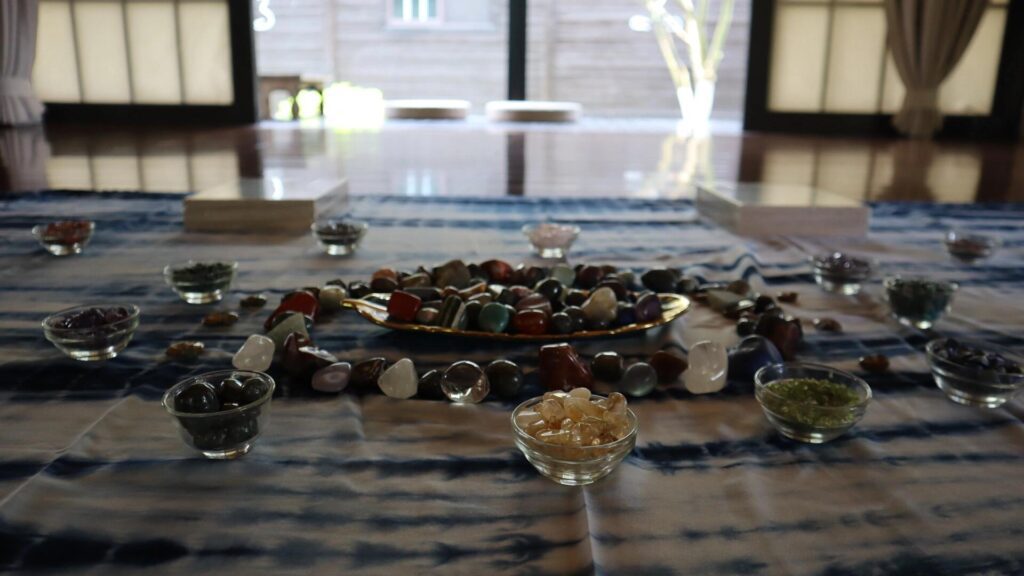
Crystals and gemstones: In some traditions, specific stones are chosen for their visual or tactile qualities — color, weight, surface texture, and refractive properties. For example, rose quartz has a pale pink color and smooth surface; amethyst has a purple tone and moderate translucency. These are described by their material properties, not by any measurable effect on the body.
Singing bowls: Metal bowls produce sound when struck or circled with a wooden mallet. The tone depends on the bowl’s diameter, wall thickness, and metal composition. In some traditions, bowls are positioned near specific areas of the body during seated practice to provide an auditory focus point. The sound produced is described by its acoustic qualities — fundamental frequency, overtone content, and sustain — rather than by any physiological mechanism.
Mala beads: Strings of 108 beads used for counting mantra recitations. Beads are made from materials including Bodhi seeds, yak bone, sandalwood, and semi-precious stones. The tactile quality of each bead material differs: Bodhi seeds have a slightly rough, wrinkled surface; bone beads are smooth and cool to the touch. Malas are used as a physical counting tool, not as a healing device.
Material Properties vs. Metaphysical Claims
It is common to encounter descriptions that attribute emotional, physical, or spiritual effects to crystals, gemstones, or other objects used in meditation contexts. These descriptions often use language such as “energy,” “vibration,” “healing,” or “balance.” Such language reflects the rhetorical traditions of the originating culture, not measurable effects verified by material science.
This guide focuses on what is directly observable: material composition, craftsmanship, acoustic properties, and documented cultural use. Whether and how these objects function in a given practice depends on the practitioner, the tradition, and the context — not on any inherent property claimed by marketing language.
Practical Notes for Using Meditation Objects
Crystals and gemstones: Handle with care to avoid chipping. Store separately in a pouch. Clean with a dry cloth; avoid water or chemical cleaners that may damage the surface of softer stones.
Singing bowls: Strike or circle the rim gently. Place on a cushion or mat to amplify low-frequency response. Avoid impact that could dent the bowl wall. Store in a dry environment.
Mala beads: Use the beads to count by sliding one bead per repetition of a phrase or mantra. The guru bead marks the starting point. Avoid submerging the cord in water; wipe beads with a dry cloth after use and store in a breathable pouch.
Frequently Asked Questions
What is the historical background of chakra concepts in Tibetan traditions?
Chakra concepts as commonly described in Western wellness contexts derive primarily from modern yoga and New Age reinterpretations of Indic anatomical ideas, not from authoritative Tibetan Buddhist texts. Tibetan Buddhist practice focuses on the mind and its transformation through study, meditation, and ethical conduct — not on manipulating invisible energy centers with objects.
Can crystals or gemstones change how I feel?
People may report subjective experiences when handling certain objects — this is a common observation, not a medical claim. The experience is influenced by expectation, setting, and the tactile and visual qualities of the object itself. There is no reliable scientific evidence that crystals produce physiological effects beyond placebo.
What should I look for when choosing a singing bowl?
Consider the acoustic quality: strike the bowl and listen for a sustained tone with overtones you find pleasant. Bowls with a clear fundamental frequency and a sound that does not decay too quickly are generally well-made. The visual appearance — hammer marks, surface polish, engraved motifs — indicates craftsmanship quality.
How do I care for mala beads?
Natural materials such as bone, seeds, and stone are porous and sensitive to moisture and chemicals. Remove the mala before swimming, showering, or applying perfumes. Wipe with a dry cloth after use and store in a breathable pouch.
Conclusion
Objects such as singing bowls, mala beads, and crystals have genuine cultural, craft, and contemplative significance within their originating traditions. Their value lies in their material qualities, the skill invested in their production, and their role as consistent supports for regular practice. Understanding them on these terms — rather than through exaggerated metaphysical claims — leads to more grounded expectations and more durable use.