It’s that time of year again when peach blossoms are in full bloom. In my heart, there has always been a most beautiful spring, and that is the spring in Nyingchi. At the beginning of the year, when it was still the dead of winter, I had already started planning to go to Nyingchi to see the peach blossoms. From the initial three people to the final six, the journey was full of ups and downs, and from the very beginning, it was destined to be an extraordinary trip!
On the plane
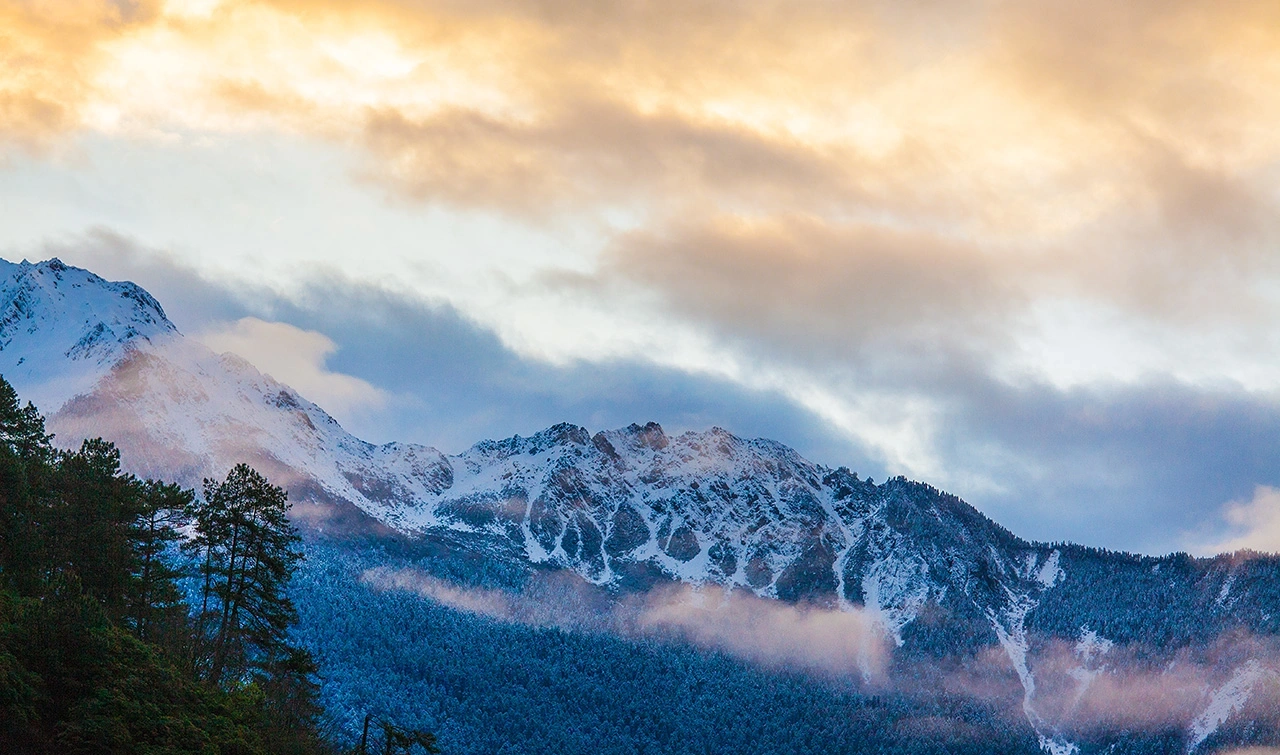
Our group arrived safely at Nyingchi Mainling Airport with high expectations. From the plane, we saw various majestic sacred mountains, which looked like they were dressed in pure white robes and were so brightly lit by the sunlight that they were almost blinding.
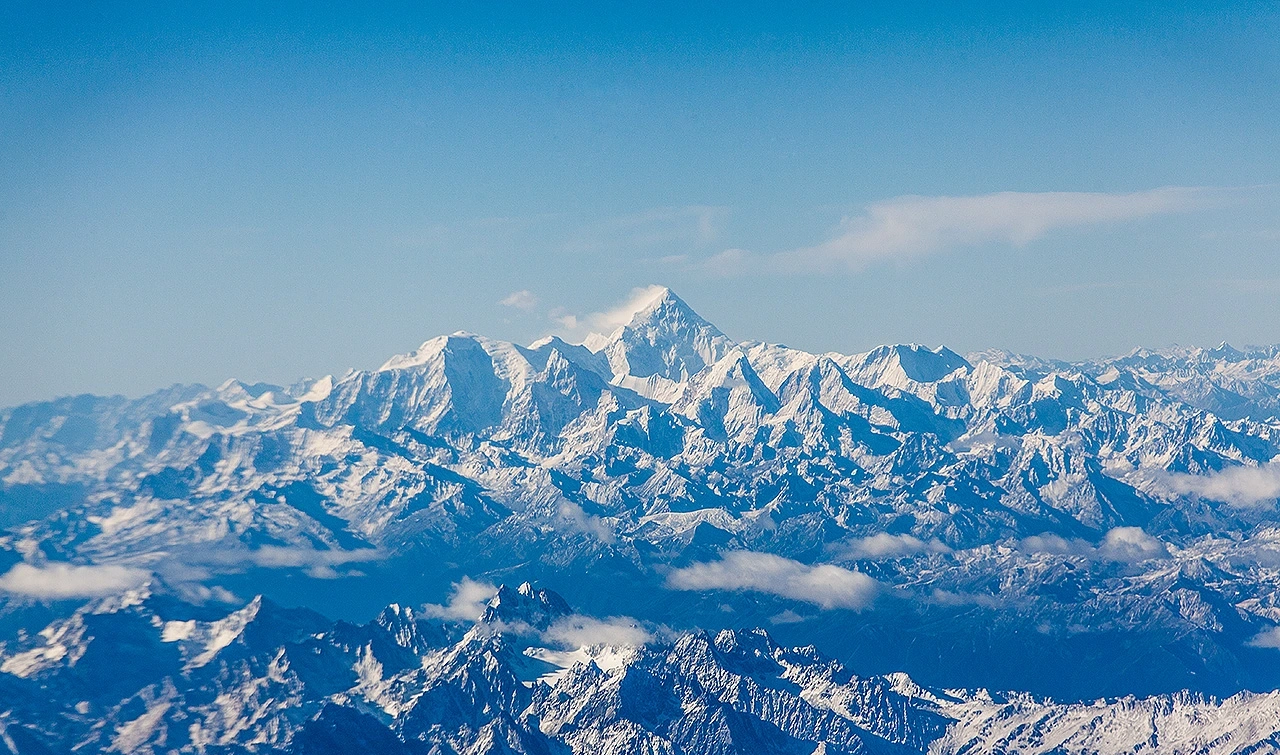
Shortly after takeoff, a commotion arose at the front of the cabin. Looking out the window, I saw a snow-capped mountain range. Upon closer inspection, I realized it was none other than Mount Gongga, the King of Sichuan Mountains! I quickly took out my camera and started snapping away.
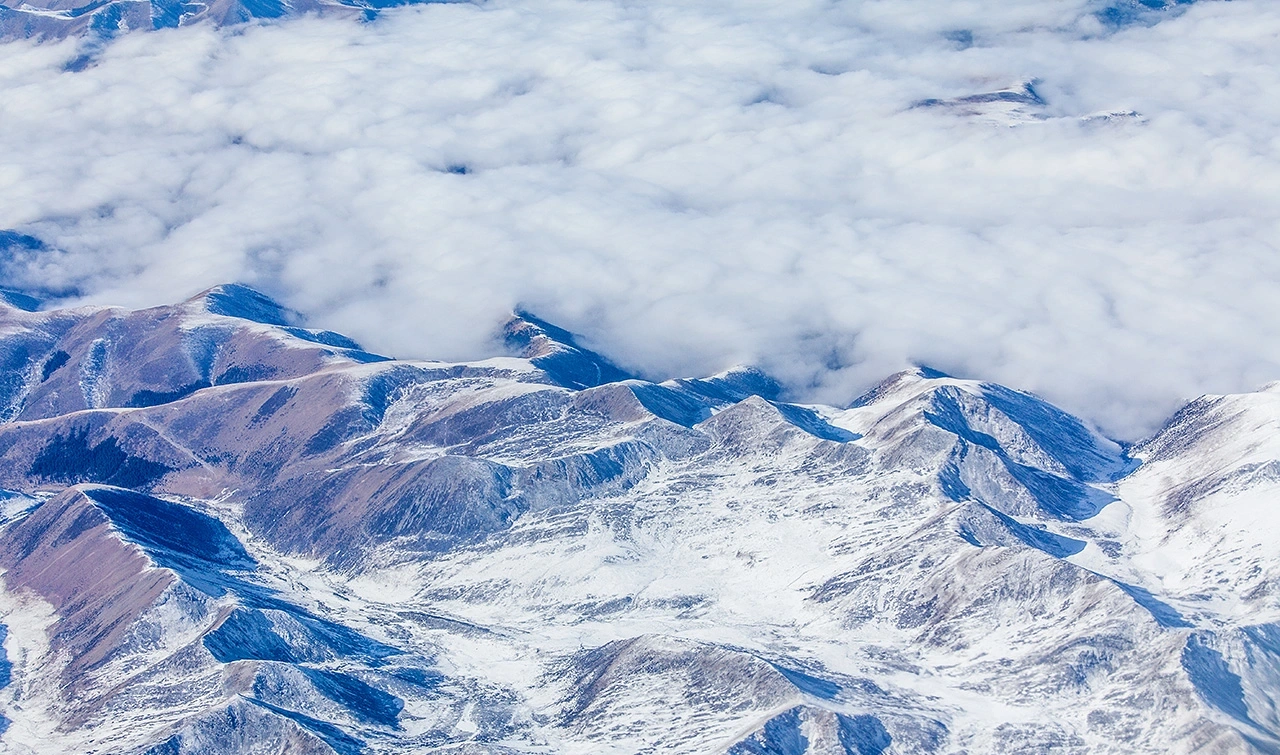
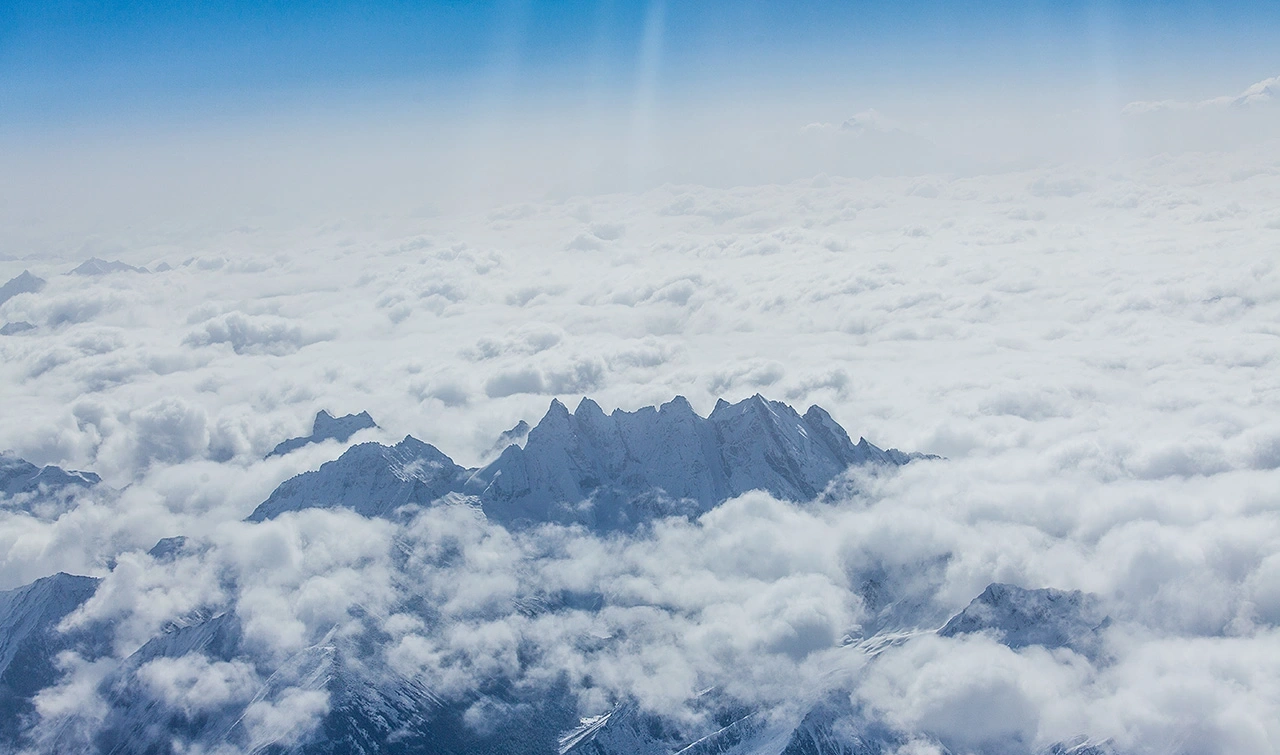
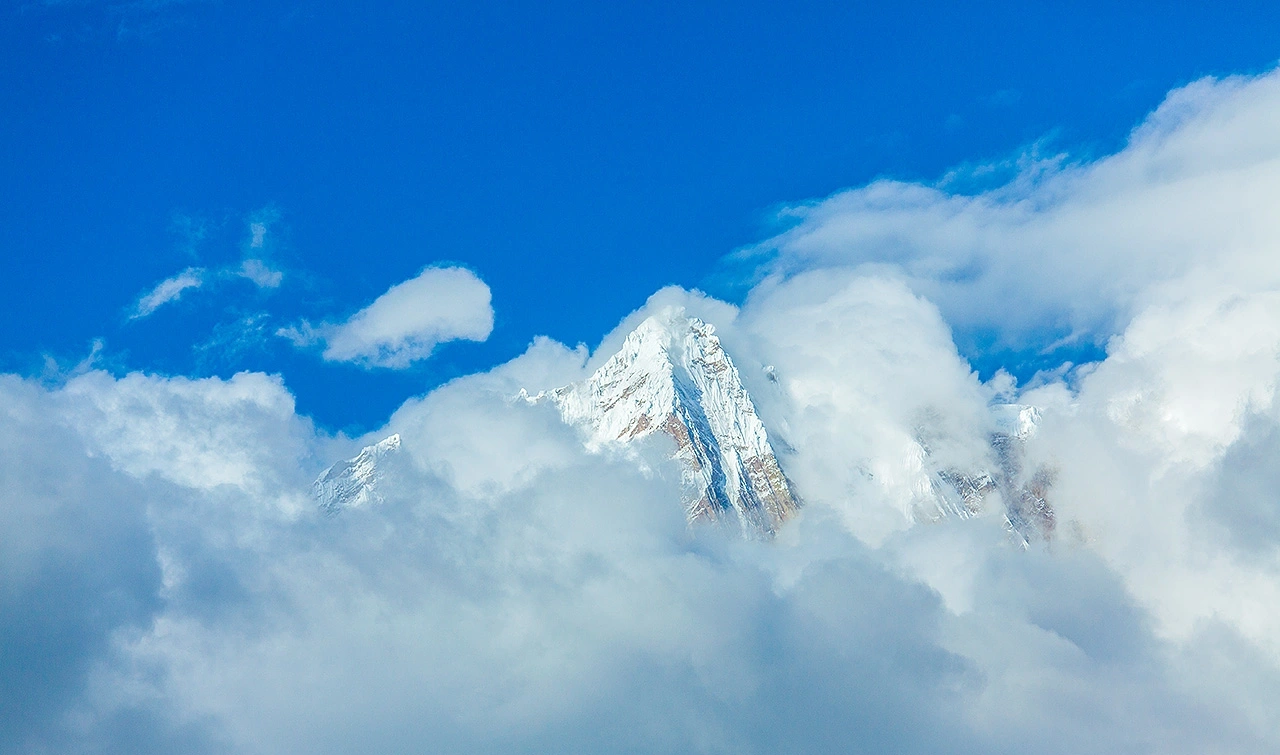
The plane continued its flight, and soon, another vast expanse of white snow-capped mountains appeared before us. It must be the Himalayas, gracefully emerging and swaying in the clouds.
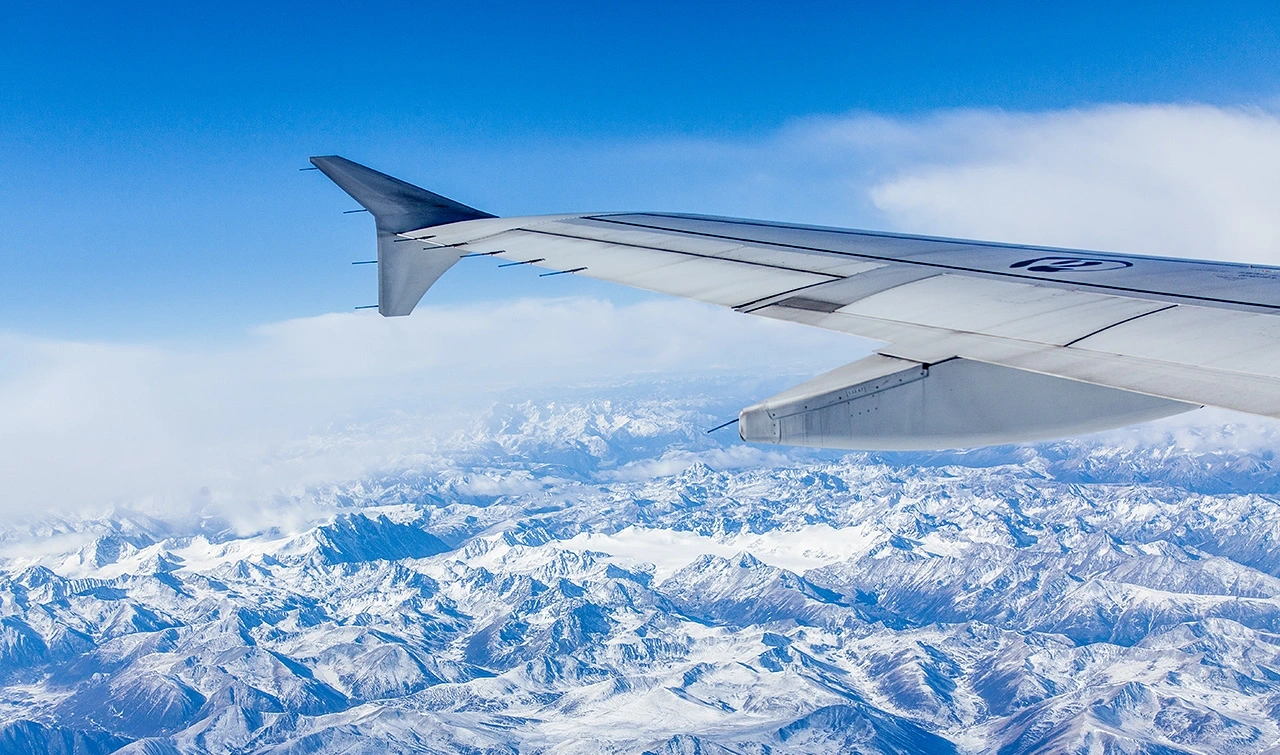
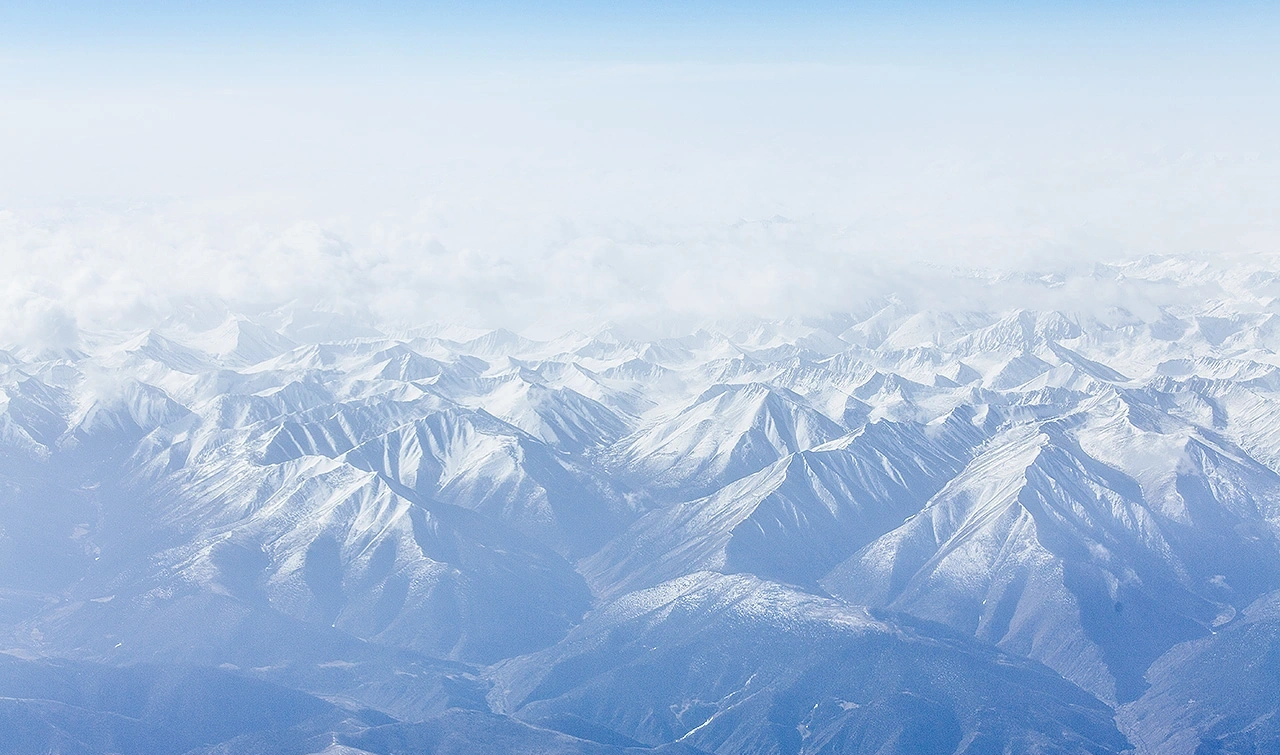
The mountains are so close, the sky is so close, this is the Himalayas.
We’ve entered Nyingchi! The plane descended slowly, and the legendary Yarlung Tsangpo River was clearly visible below—magnificent!
I couldn’t help but marvel: I’ve already taken nearly a hundred photos before the plane even landed! This trip to Nyingchi is sure to be full of surprises!
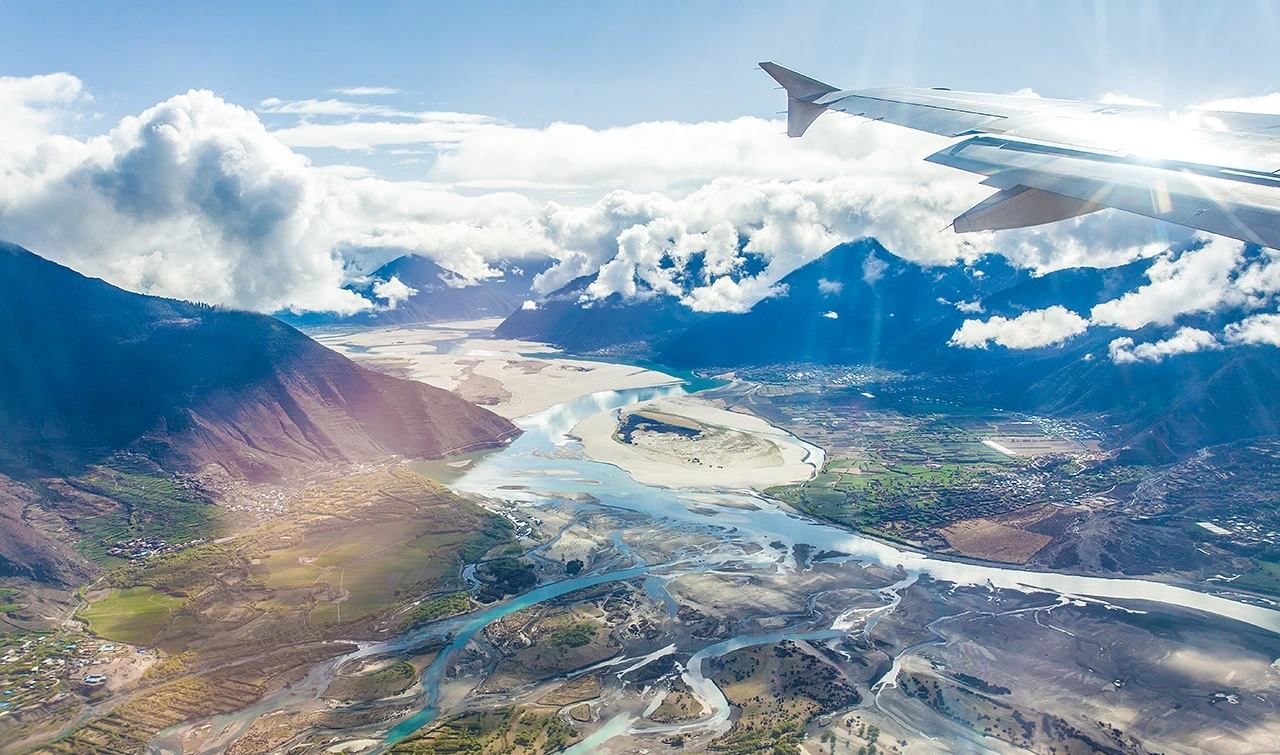
Through the airplane window, one could already vaguely see peach blossoms.
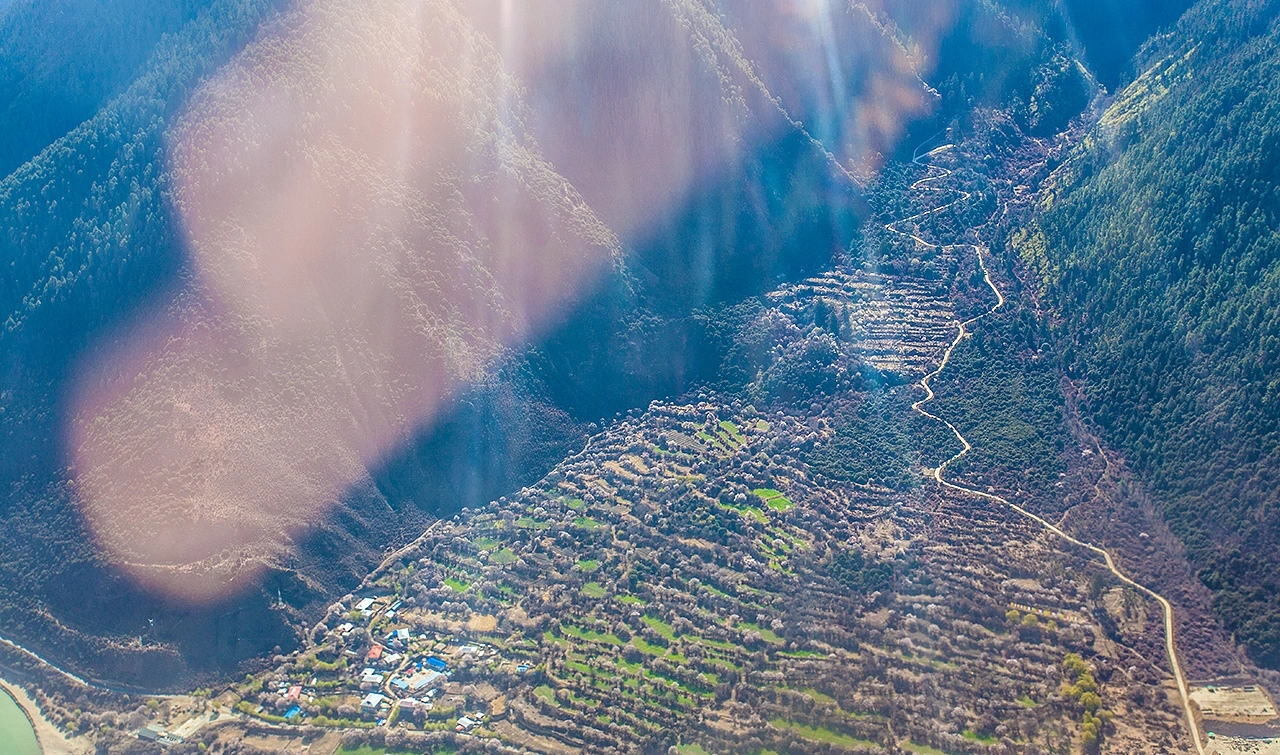
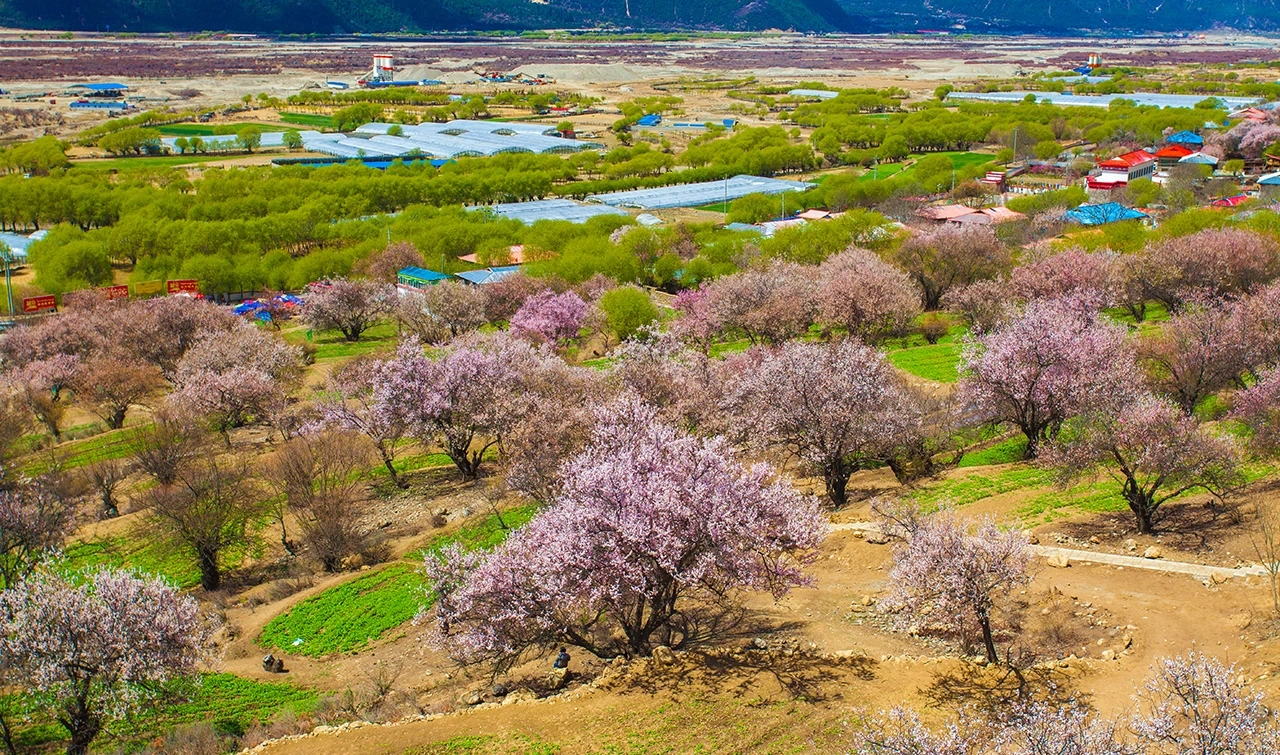
As we exited the airport, our pre-arranged driver, Mr. Zhou, was already waiting for us at the entrance. He welcomed us, guests from afar, with a traditional Tibetan hada (ceremonial scarf). Mr. Zhou had been driving us to various places for the past few days. After a brief exchange of pleasantries, we set off according to our pre-arranged itinerary. Our first stop was Gala Village, one of the main venues for the Peach Blossom Festival in Nyingchi Prefecture. It’s essentially a fenced-off area of peach blossoms on a hillside.
Peach Blossom Village
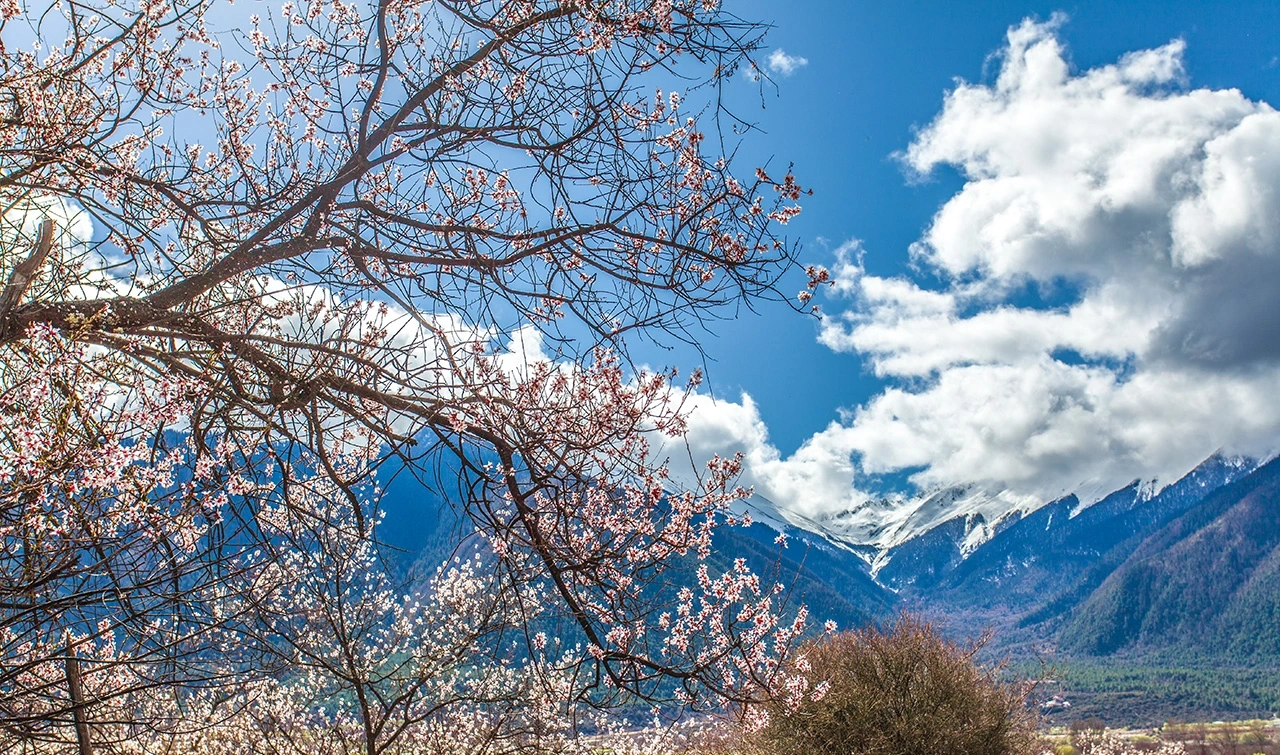
Many peach blossoms were knocked down due to the heavy rain a few days ago, but the weather is great today.
Grand Canyon
After a quick lunch of noodles in Bayi Town, we continued our journey towards the Yarlung Tsangpo Grand Canyon. It was still about a 3-hour drive, and some sections of the road were under construction, so we didn’t want to waste too much time. Some people wanted to arrive before dark and stay overnight in Zhibai Village, the deepest part of the Yarlung Tsangpo Grand Canyon, to photograph Namcha Barwa Peak at sunset.
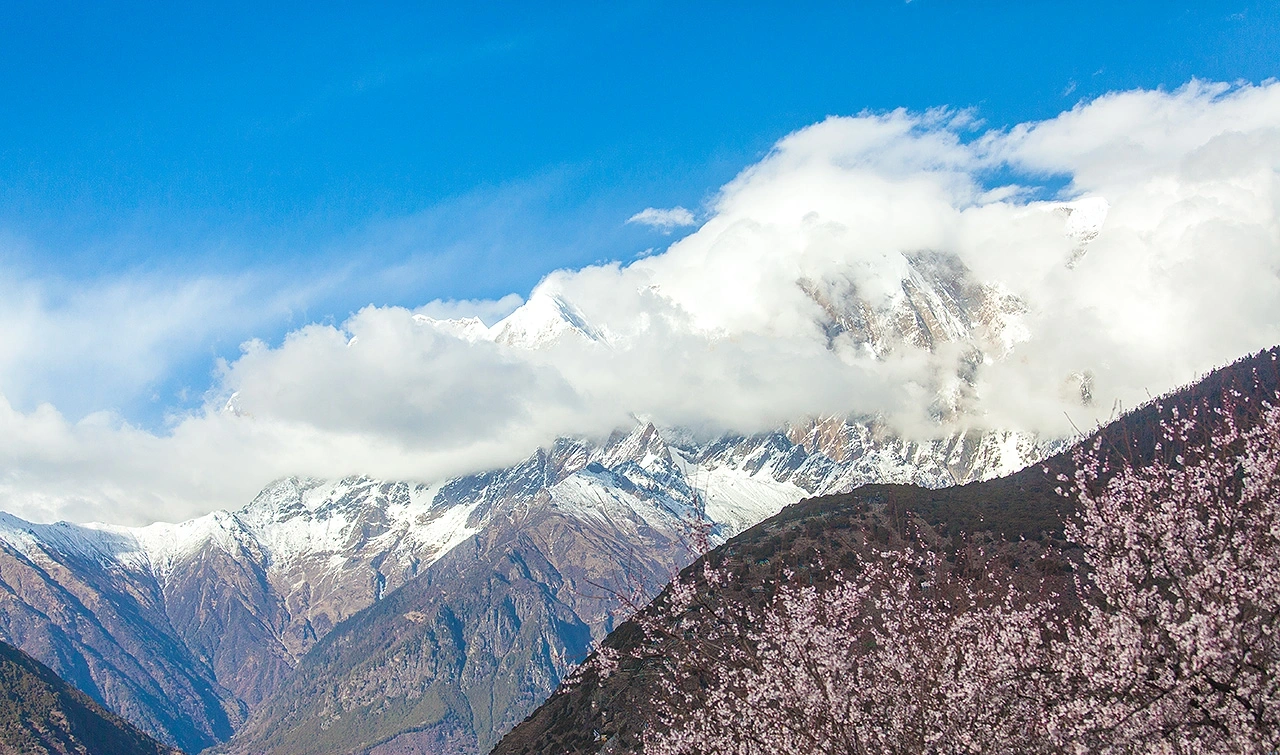
Along the way, patches of peach blossoms were everywhere, sometimes near, sometimes far, the air faintly filled with their sweet fragrance. Suddenly, a strong wind picked up; the river was shallow, exposing the riverbed, and road construction had whipped up gusts of dust, also blowing white clouds into the otherwise cloudless sky. In Tibet, the weather is unpredictable; one moment it’s bright sunshine, the next it’s overcast. I was anxious, wondering if we’d even be able to see the sacred mountain. Finally, at 5:30, we arrived at the ticket office of the Grand Canyon.
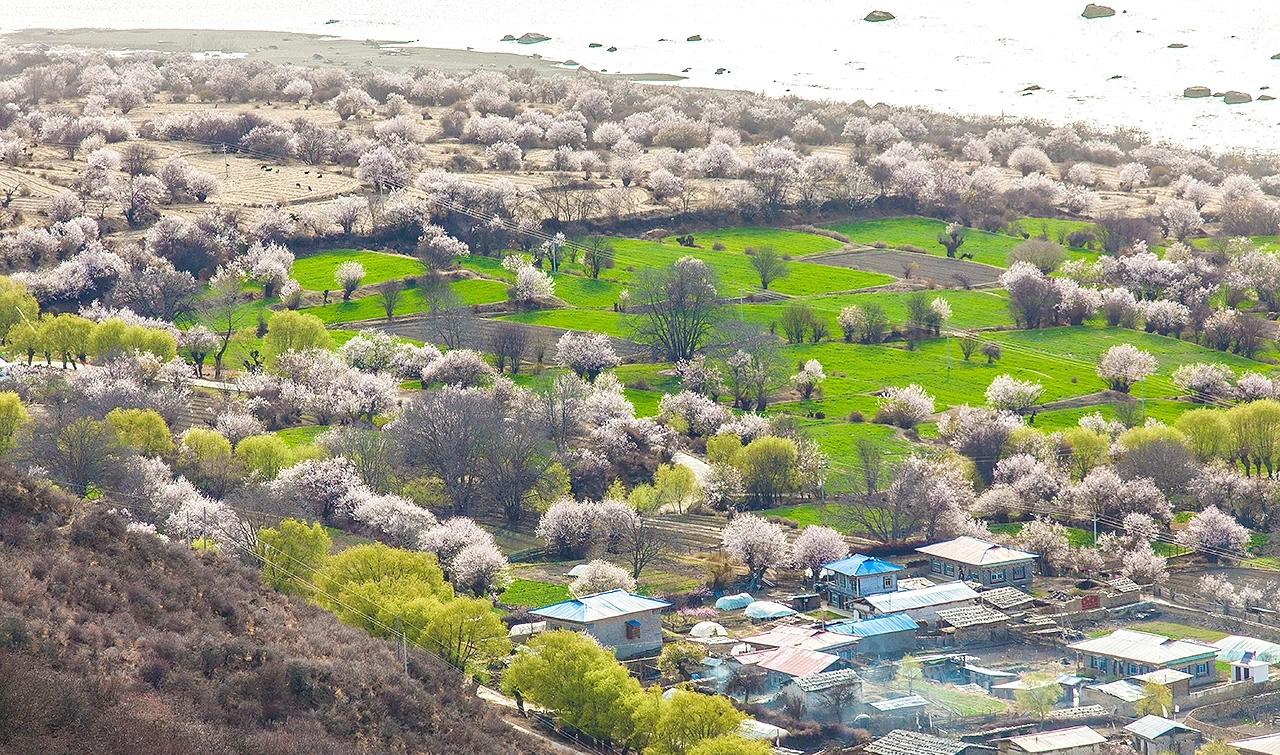
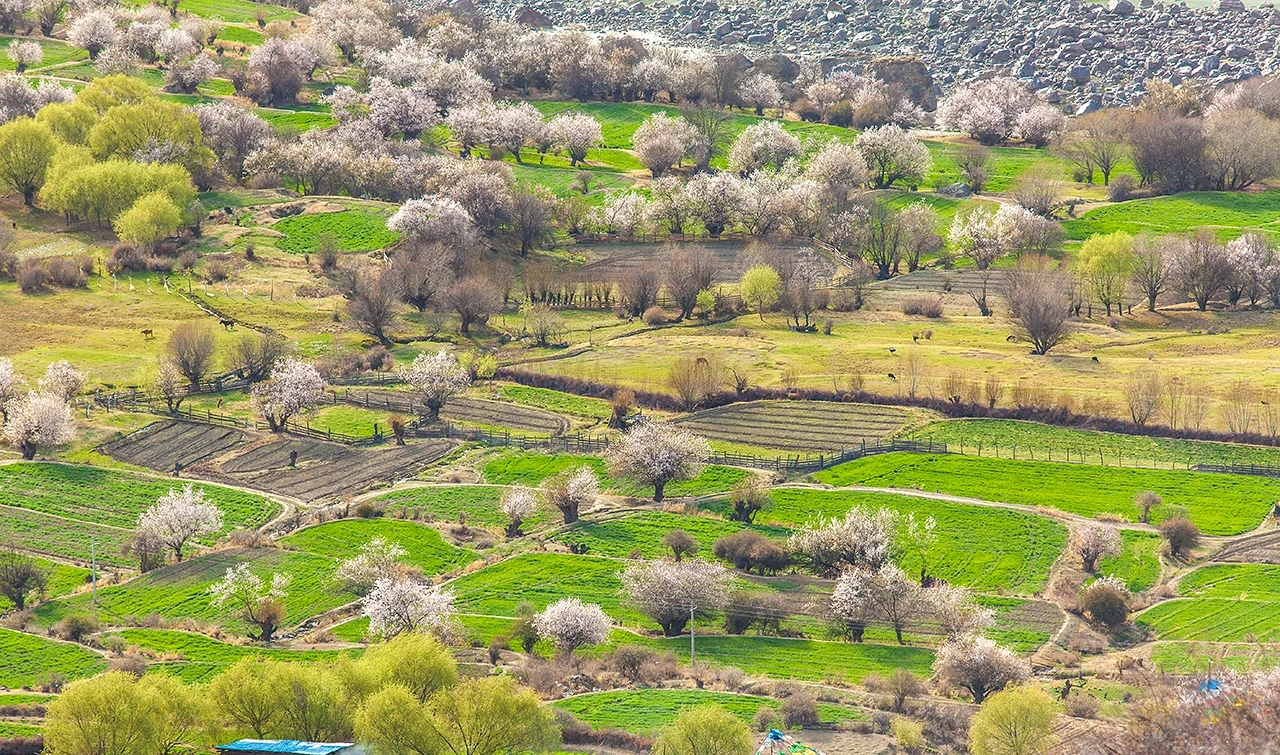
After entering the scenic area, there are four viewing platforms of varying sizes along the way, offering different angles to observe the winding Yarlung Tsangpo River. However, due to strong winds and dust obscuring our lenses, we decided not to stop and head directly to Zhibai Village. The wind never stopped, growing stronger and stronger. Clouds, seemingly from nowhere, increasingly gathered around Namcha Barwa Peak. Our driver, Mr. Zhou, remarked, “We won’t be able to see it today.” But I firmly believed we would see it, because a seven-colored auspicious cloud appeared on the road from Bayi Town to the Grand Canyon – a sign of good fortune! The car wound its way through the canyon scenic area until we finally arrived at our destination – Zhibai Village. This is the closest village to Namcha Barwa Peak, and the sacred mountain has brought good fortune to the villagers. We chose a guesthouse called “Baqing Farmhouse,” a Tibetan-style farmhouse inn. I must especially mention our room; its window directly faces the main peak of Namcha Barwa, hence the name “view room.” Having put down my luggage and with some time to spare, I decided to wander around the area.
Leaving Baqing Farm, I strolled leisurely up the hillside. The wind had died down, and Tibetan pigs, chickens, and cows roamed freely in the village. The air was thick with the smell of cow dung—a truly authentic rural experience.
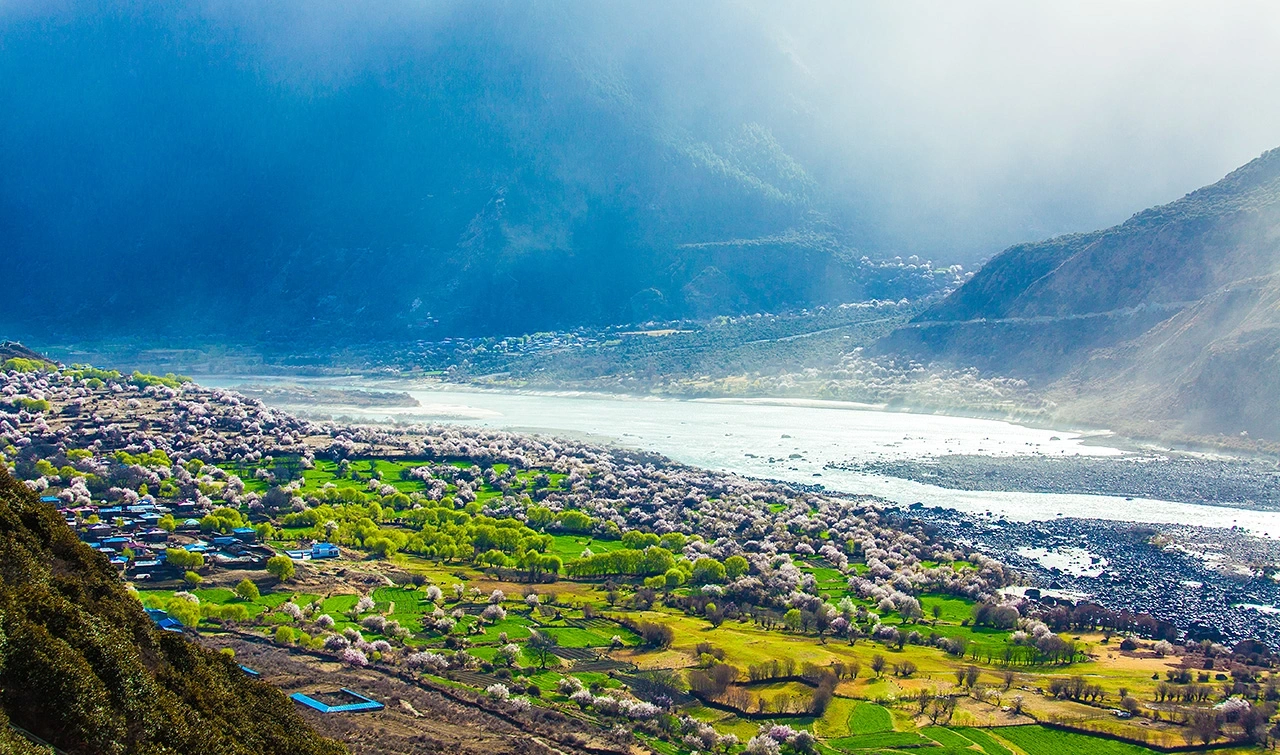
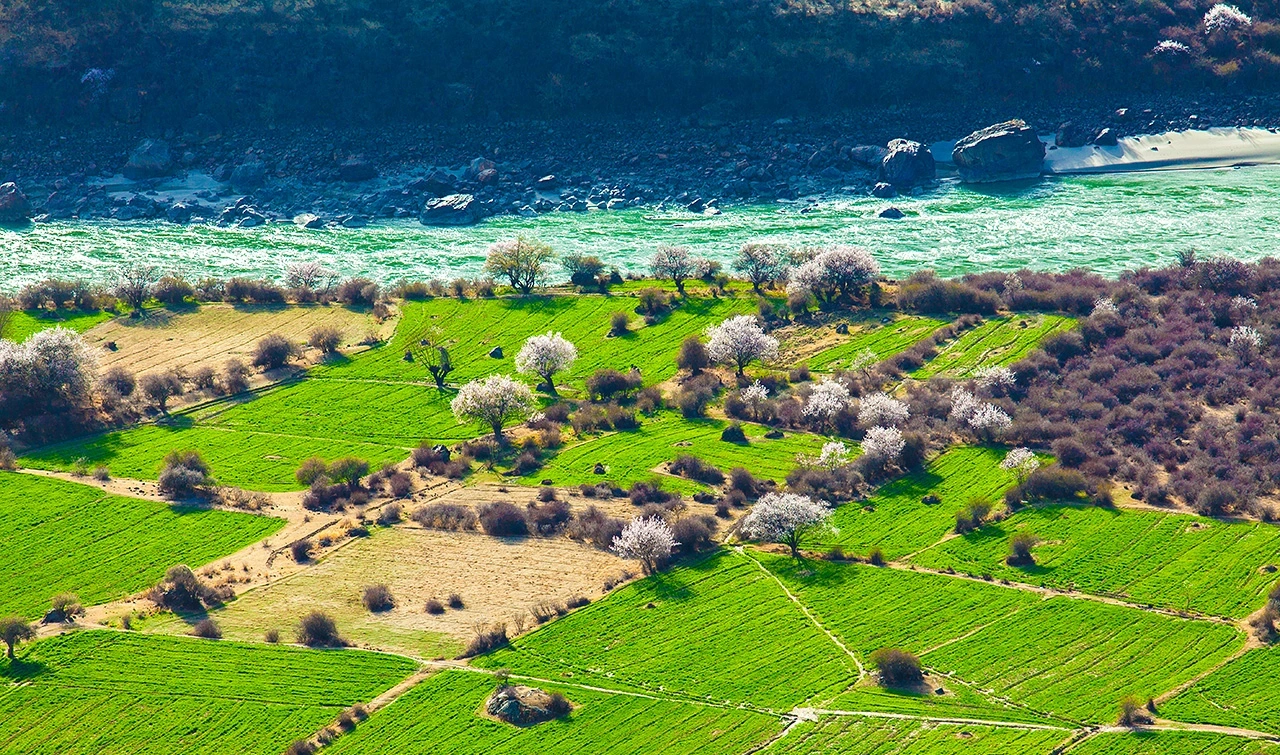
The wishing tree in front of Namcha Barwa is covered with khatas and prayer flags.
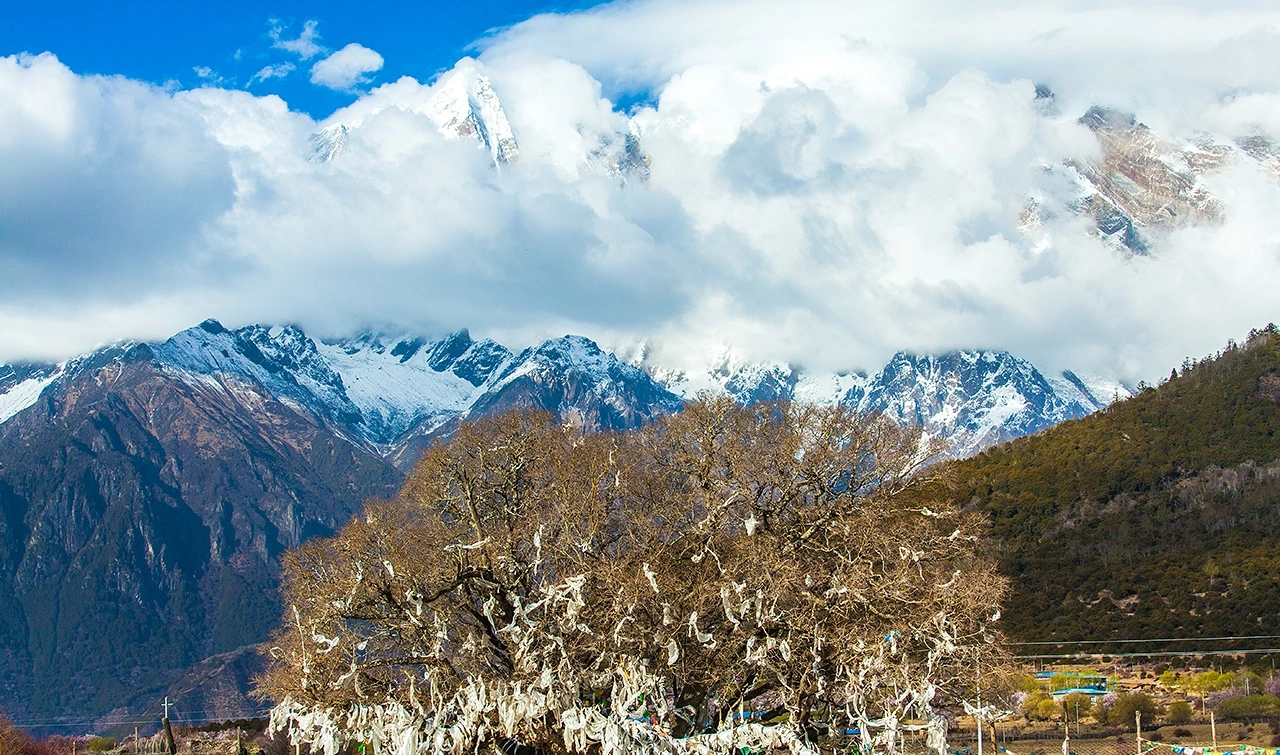
Namcha Barwa
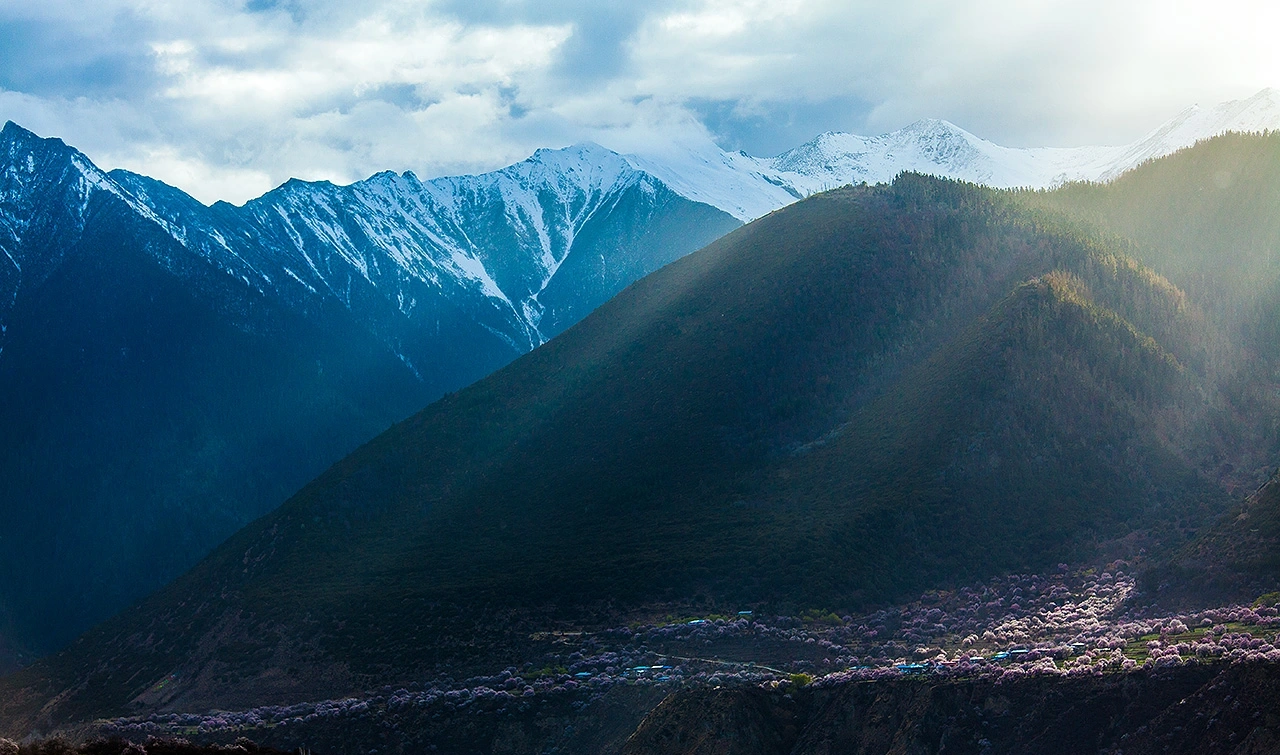
From the hillside, I could see Baqing Farmhouse. It wasn’t on the main street of Zhibai Village; its location was slightly off-center, but the view of Namcha Barwa was excellent. The altitude here was over 3000 meters, and I was a little out of breath climbing. Having been to Tibet many times, I was experienced and not worried about altitude sickness at all. Time passed slowly, and the sun had already set. The clouds swirling around Namcha Barwa’s main peak never dissipated, so I didn’t get to see the golden sunrise on the mountain. I felt a little disappointed. Just as I was about to return to the guesthouse, the shy sacred mountain secretly parted its veil of clouds. I quickly took a picture with my phone; at least it captured a little bit of the golden sunrise effect, though the main peak never truly appeared.
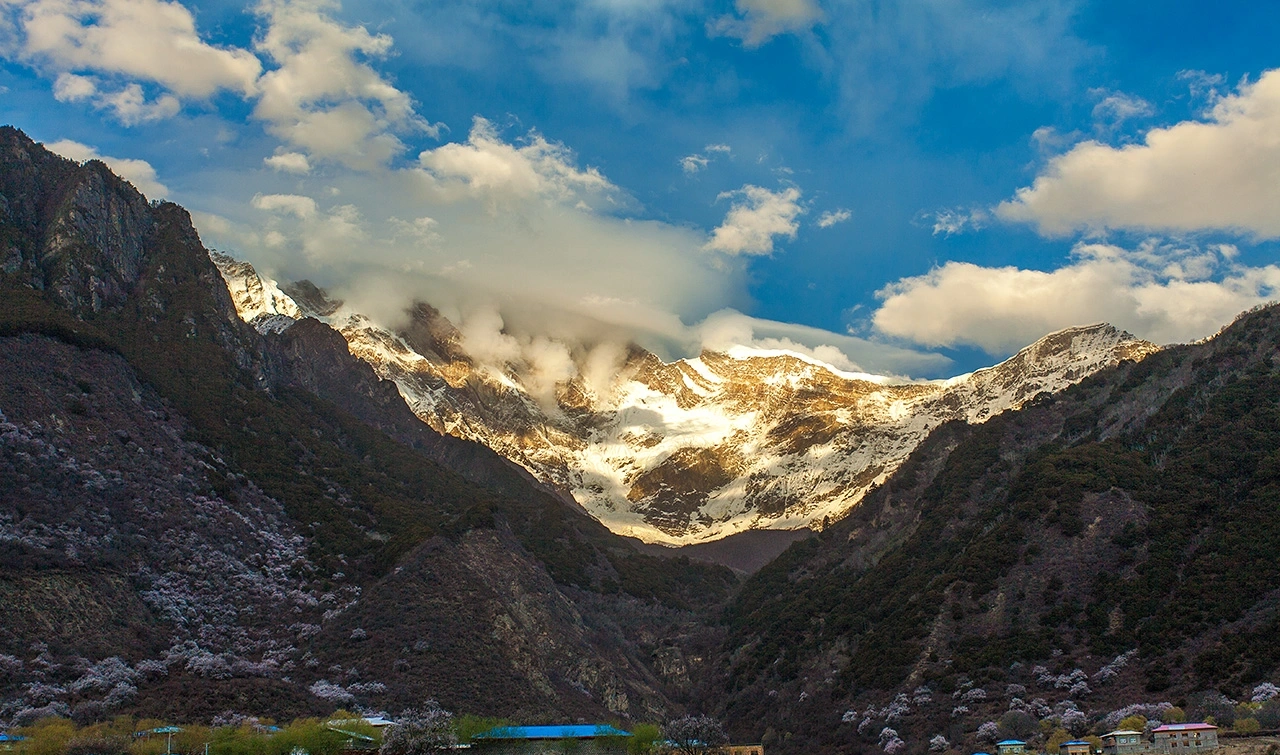
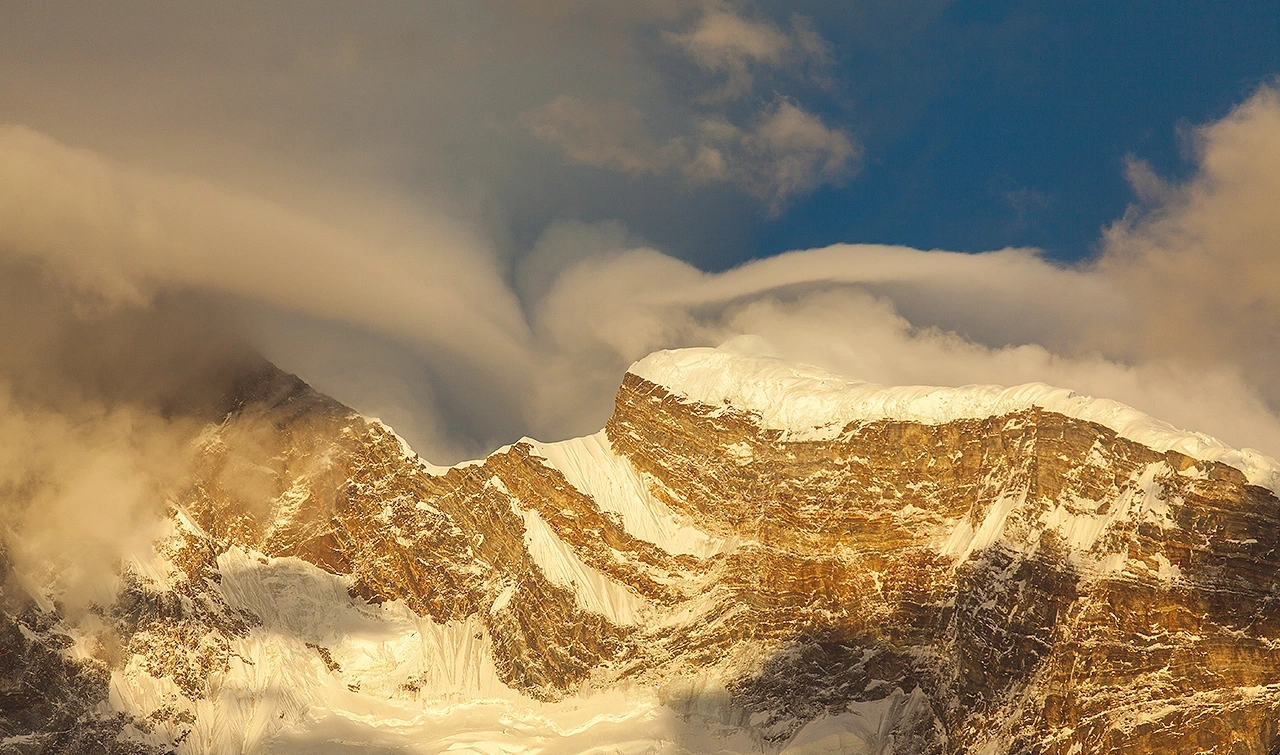
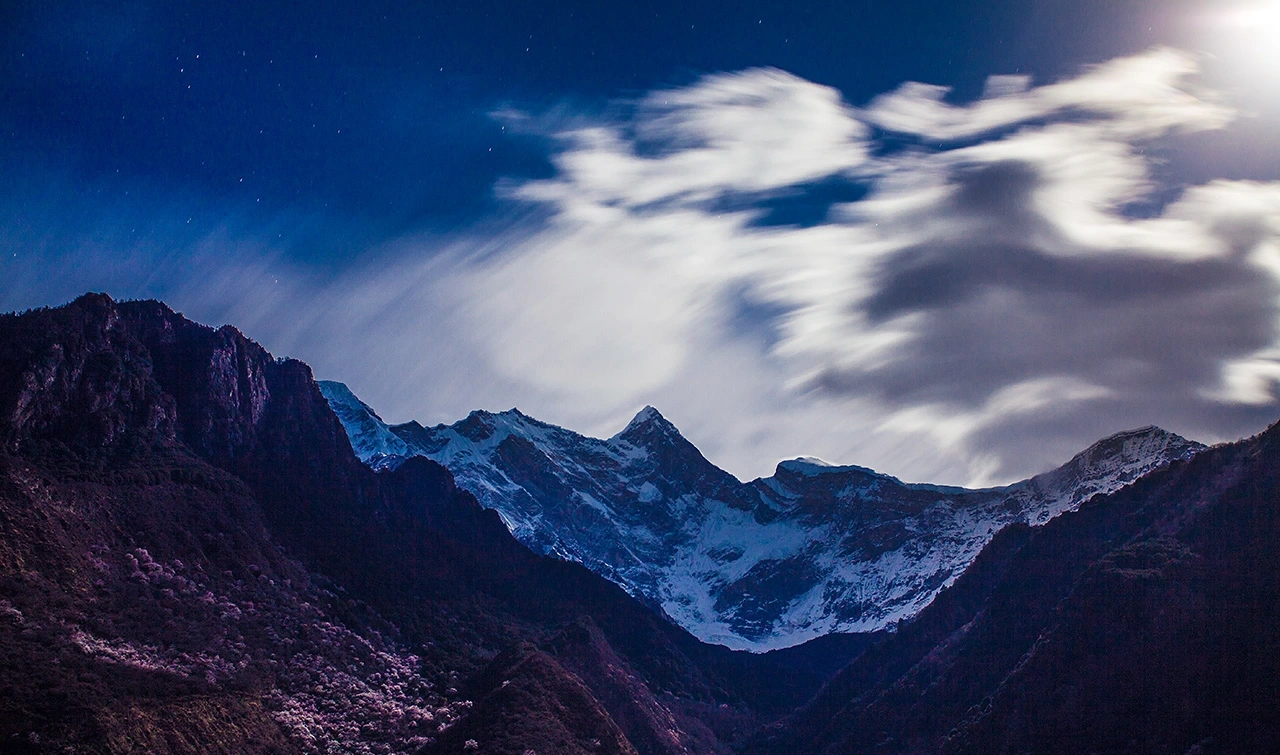
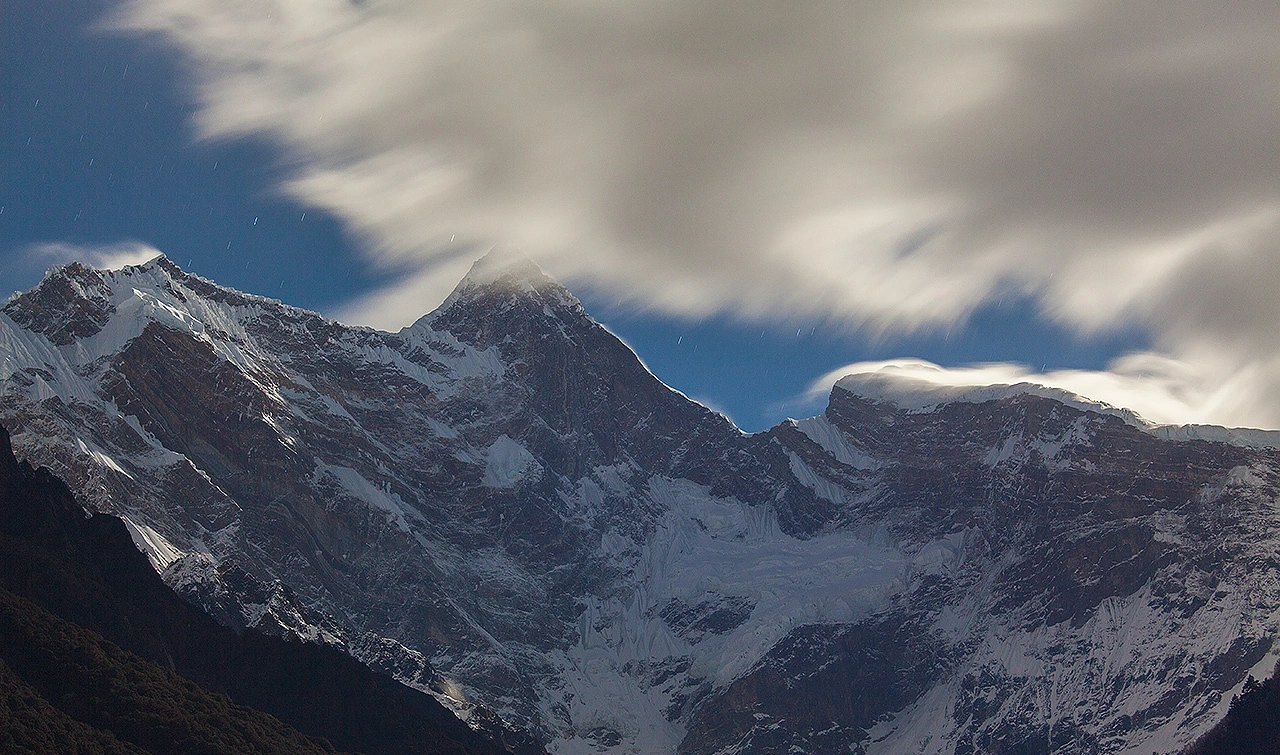
After returning to the guesthouse and having dinner, most of us chatted and drank tea downstairs since there was free Wi-Fi. Someone noticed that, when we stopped paying attention to Namcha Barwa, it quietly parted its veil and revealed its full beauty. The main peak of Namcha Barwa! Suppressing my excitement, I quickly called my companions upstairs to take pictures. The colorful clouds truly brought us good luck; I’ve been to the Grand Canyon three times, and this was the only time I’d ever seen the main peak.
Big Bend
So, my luck was pretty good, wasn’t it? The shy Namcha Barwa peak wouldn’t let you gaze at it closely, quickly disappearing behind the clouds. It didn’t reappear until we left the next day, but that was enough. She’s no longer a mystery, because we’ve seen her!
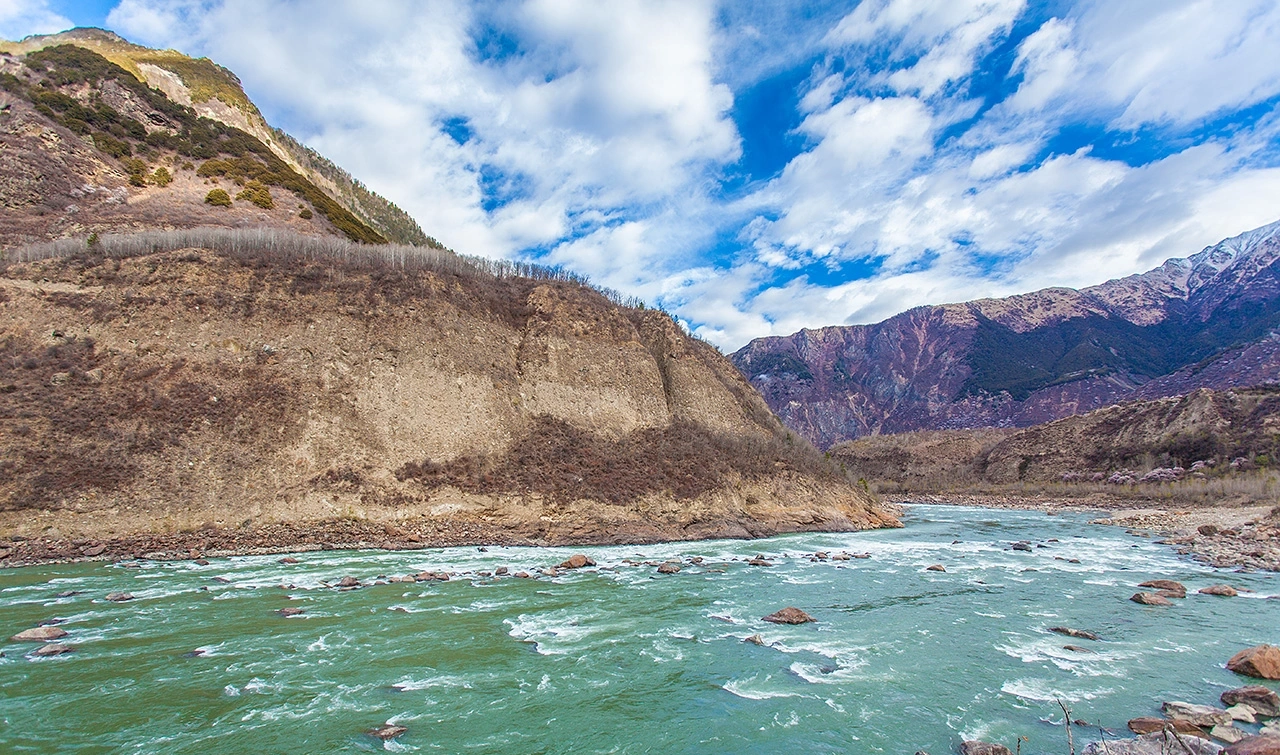
Hoping to see her again was perhaps too greedy; we never saw her again. After breakfast at the guesthouse, we continued our journey, taking the same route we took from the Grand Canyon ticket office yesterday. We stopped at a viewpoint along the way; there was no wind or sand, and the visibility was much better than yesterday.
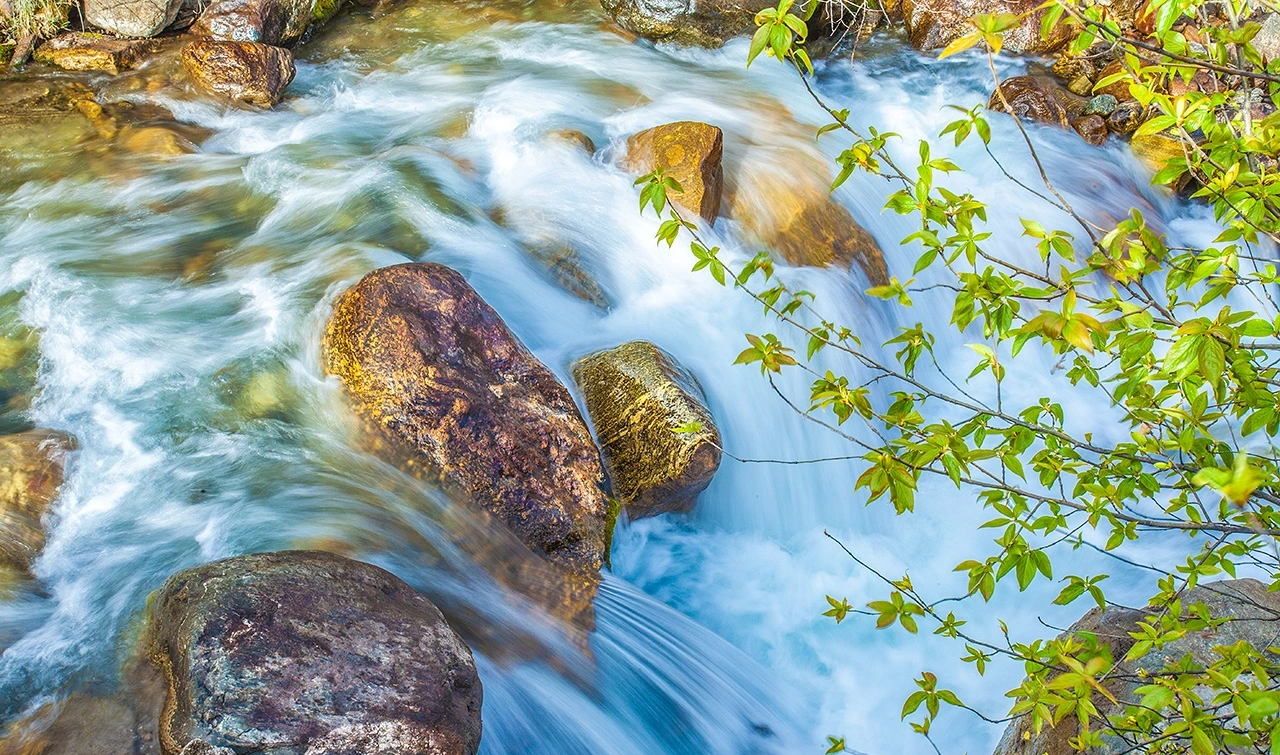
Niyang River
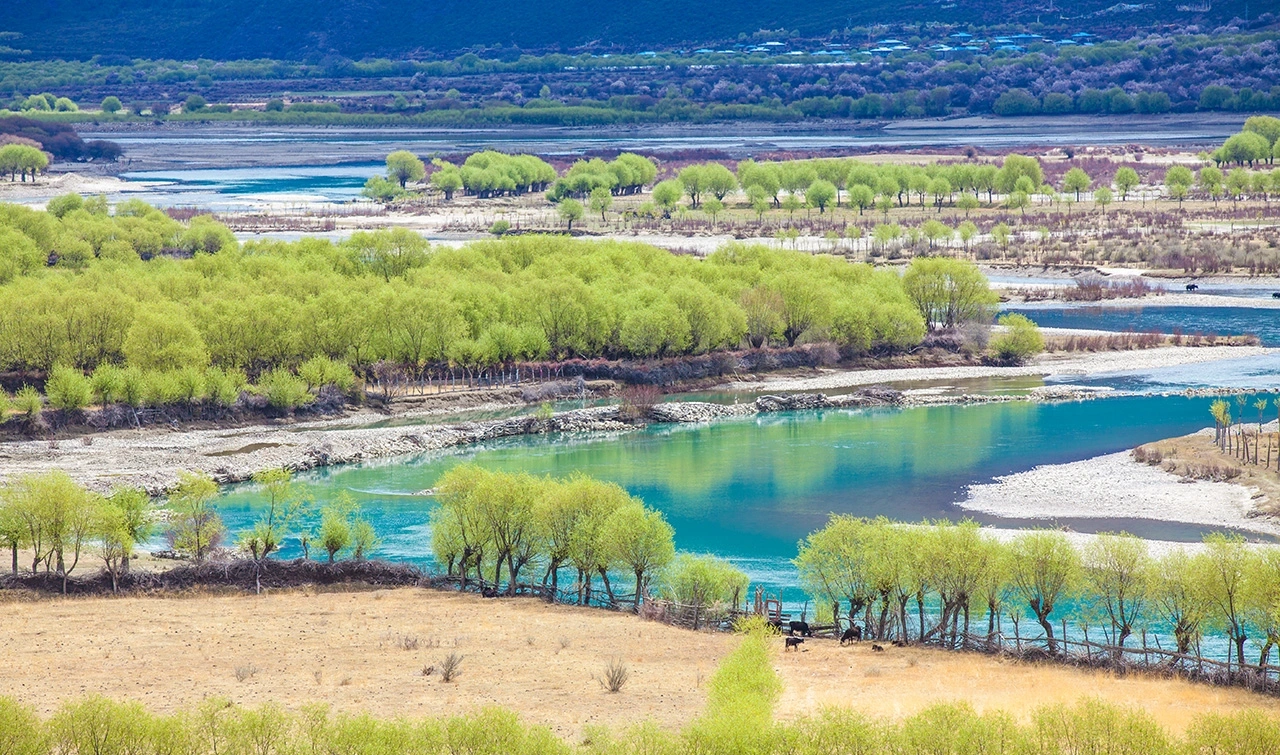
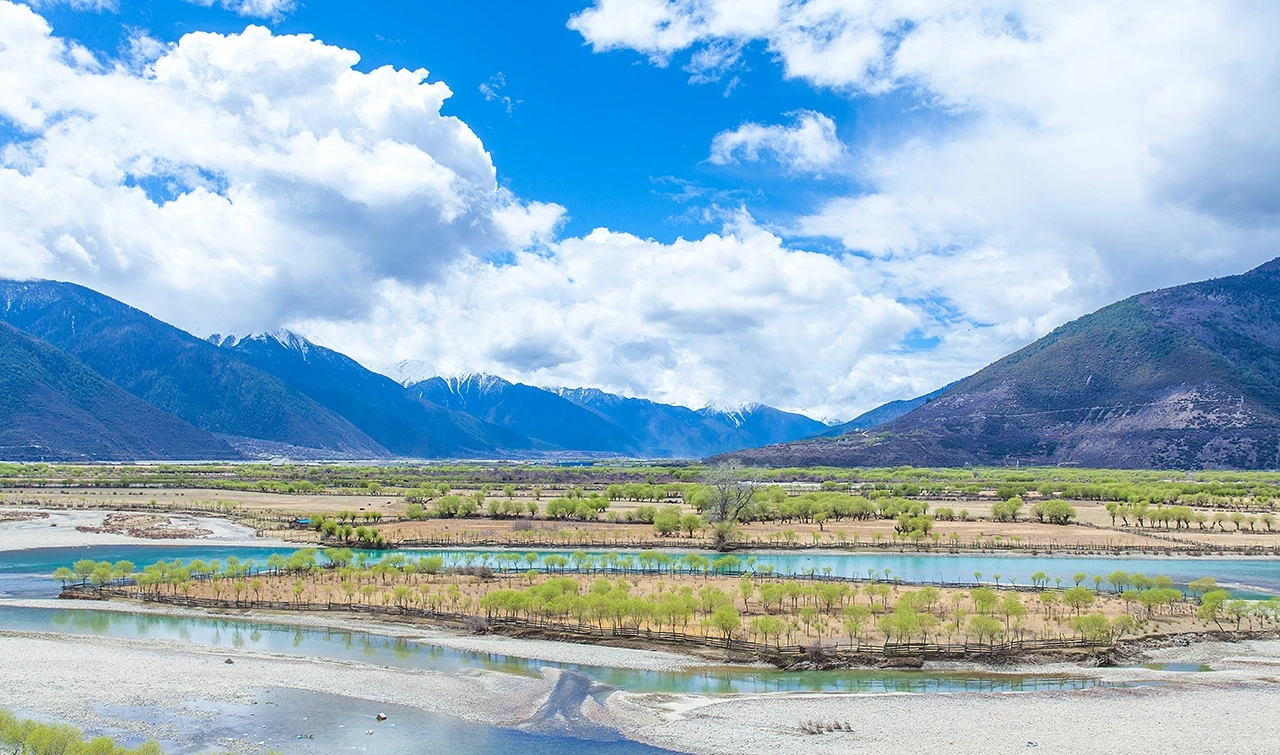
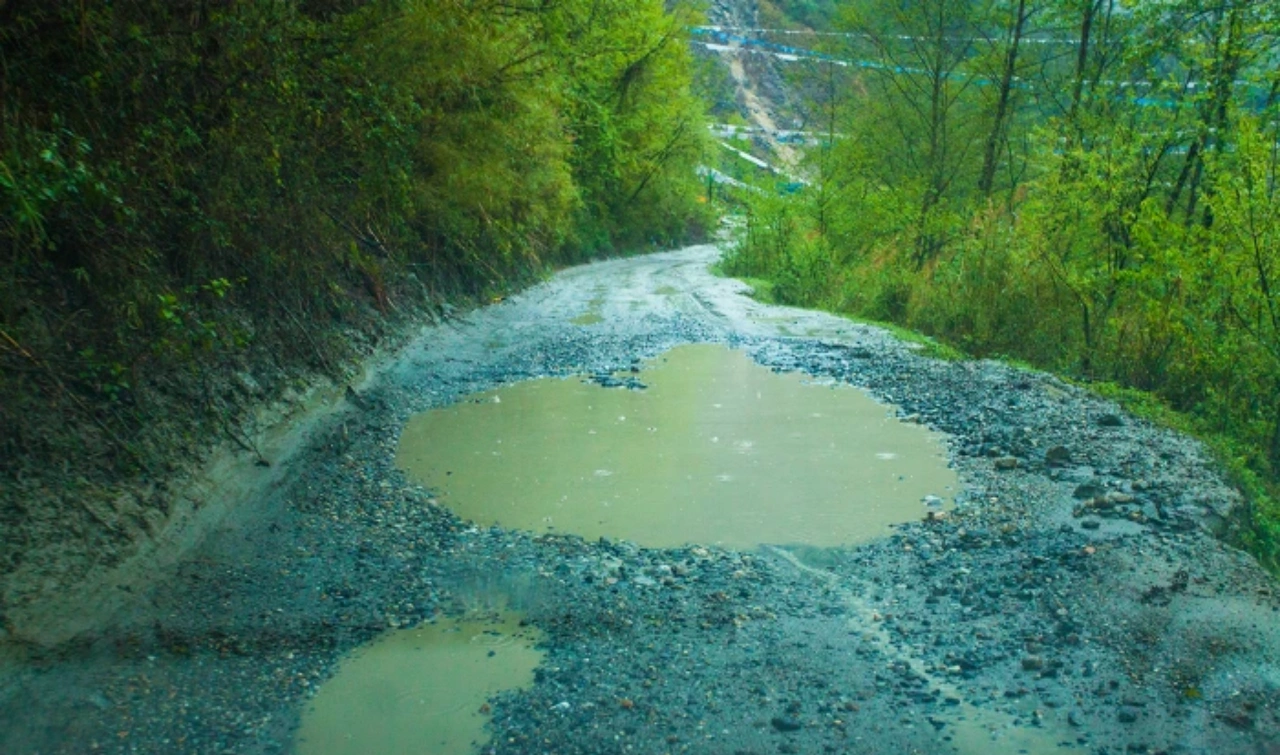
We started our journey along the Yarlung Tsangpo River, and then along the Nyang River. To save time and avoid backtracking, we decided to take a shortcut and cross the river. The route was shorter, but one section was quite rough, full of potholes.
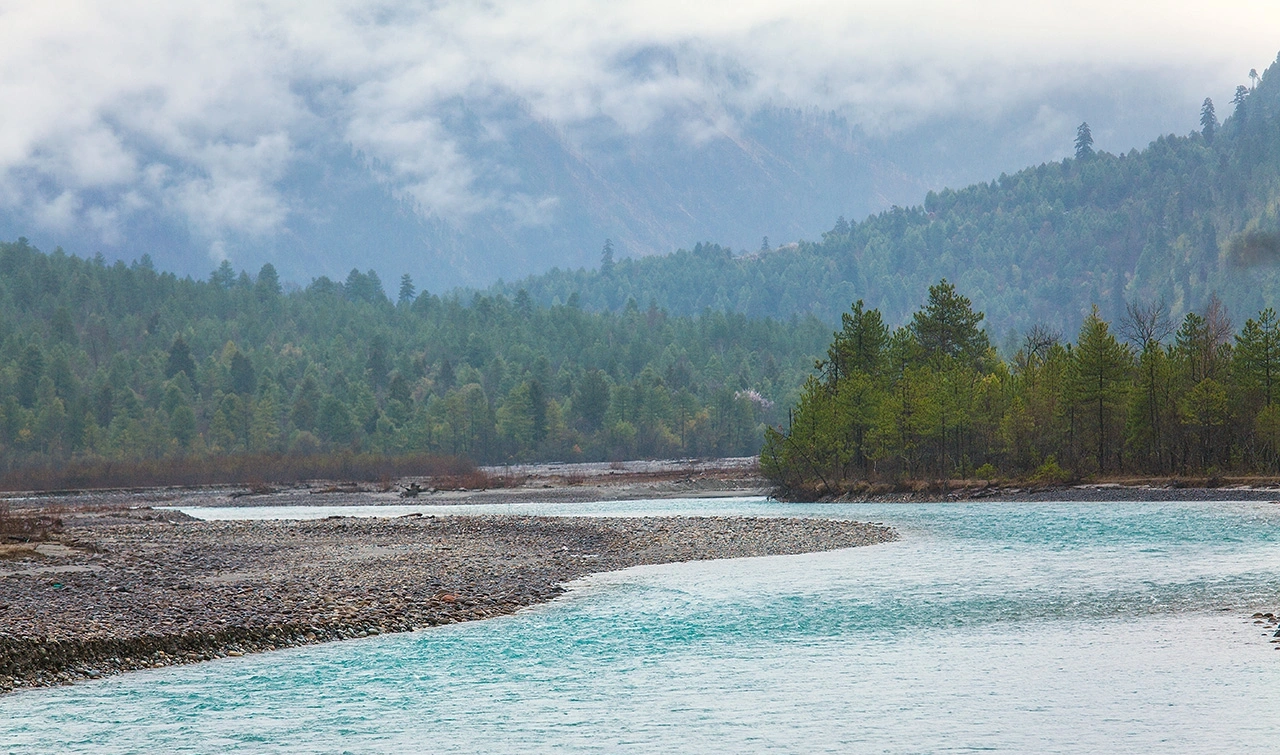
Upon reaching the other side, the road became even worse, and we endured a bumpy ride for quite some time, with intermittent light rain. Once the road leveled out, the scenery of the Nyang River Valley came into view. The Nyang River flowed from a crack in the sky; its clarity, its purity, its beauty, its gentleness were like Princess Wencheng’s wedding dress, embodying the spirit of the Tang Dynasty, the charm of southern Tibet, and unparalleled elegance!
Sejila Mountain
We dared not linger too long in the magnificent and beautiful Nyang River Valley. Our journey today was still arduous; we needed to cross the Tongmai Bridge before dark and reach Bomi Prefecture. It was already past noon, and we still had to traverse the mountains and valleys to reach the Sejila Pass. Goodbye, beautiful Nyang River!
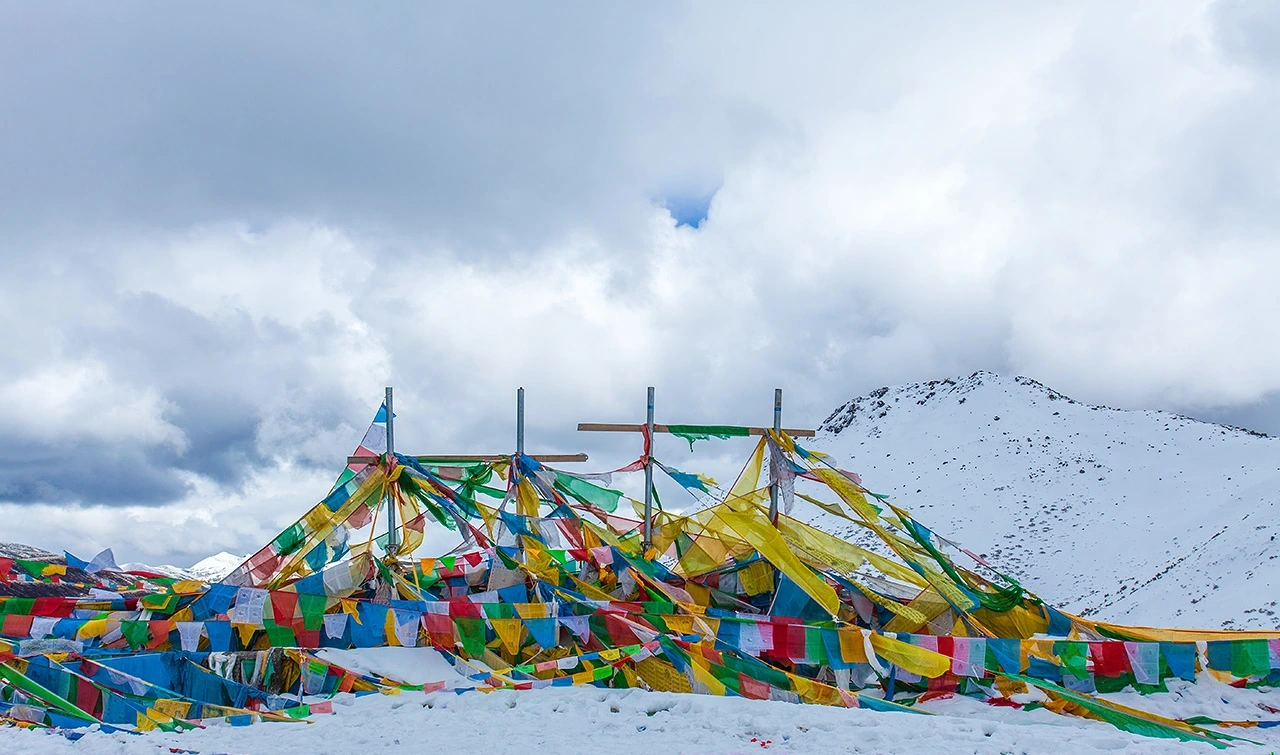
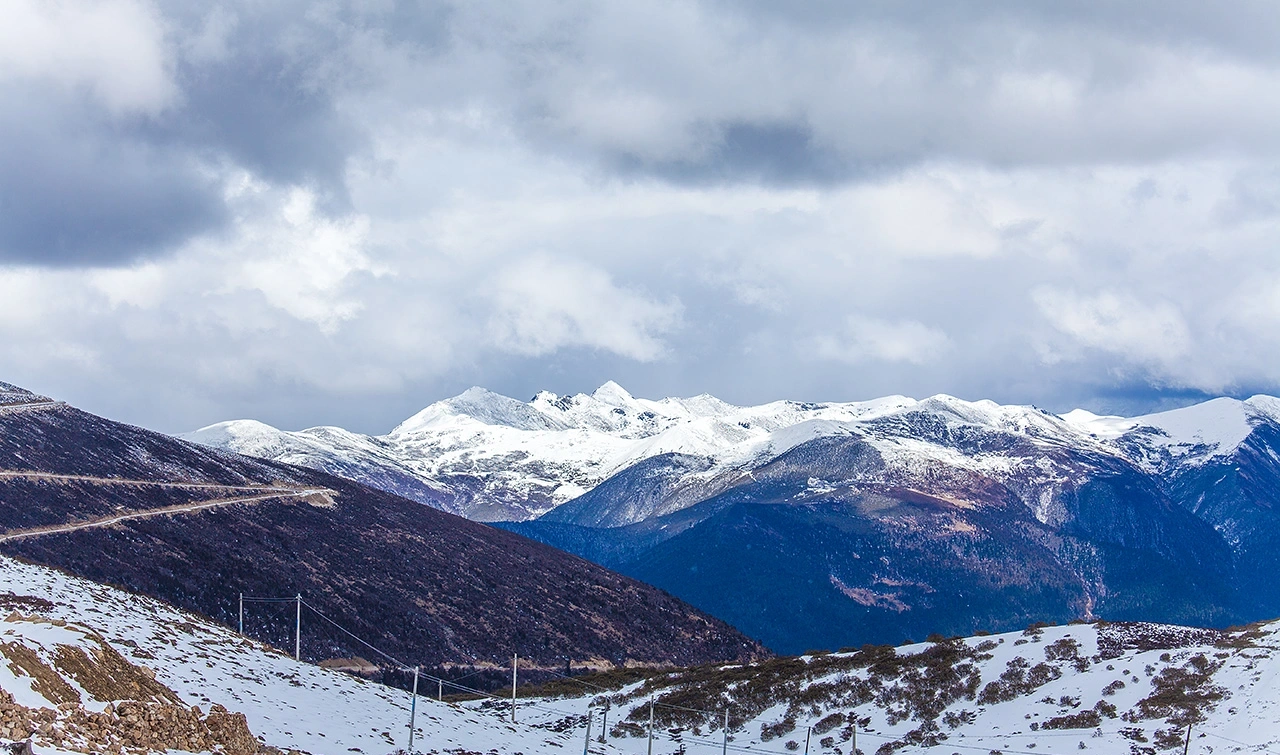
The higher the car climbed, the heavier the rain became. As we approached the Sejila Pass, the raindrops turned into small snowflakes. When we reached the Sejila Pass, the ground was completely white. Standing at the pass, the granular snow stung our faces, and we could barely open our eyes. We quickly got out, took a picture in front of the landmark building, and left.
After passing the pass, it was all downhill. This snow was strange; it stopped falling after we crossed the pass. The valley contains the most famous Lulang Forest, with dense, straight pine trees covering the entire continuous mountain range. The scenery here must be most beautiful in summer.
After descending the mountain, we arrived at Lulang Town. Lulang Town is most famous for its stone pots, which aren’t ordinary stones but from Motuo. The restaurant was recommended by our driver, Mr. Zhou, and the food was decent. During our meal, we happened upon a local Tibetan wedding. Curiosity piqued, I wanted to see what a Tibetan wedding was like. We were greeted with barley flour and butter wine. The clothing of the Tibetans in the Nyingchi region is quite different from that in Lhasa.
After a satisfying meal, we had to continue our journey. The road ahead was now shrouded in dark clouds. We were about to traverse the most difficult section of the Sichuan-Tibet Highway—the short 20-kilometer stretch from Pailong to the Tongmai Bridge—considered the most challenging part of the entire route.
When we actually reached the Tongmai Perilous Section, we were truly terrified by the danger. Everyone in the car stopped talking and focused on the road ahead. The rain intensified, and the road became increasingly treacherous. On one side were deep ravines and treacherous shoals, and on the other, solid cliffs. Large trucks roared past us on the less than five-meter-wide road without slowing down.
Gang’er Village
Gangxiang Nature Reserve is located 22 kilometers west of Bomi County on the south side of the Palong Tsangpo River. Along the way, you will pass through two villages, Gangdui Village and Gangmei Village. Both villages are Tibetan cultural villages, typical villages in southern Tibet. The villages are surrounded by mountains, and after being washed by a light drizzle, their beauty is even more evident.
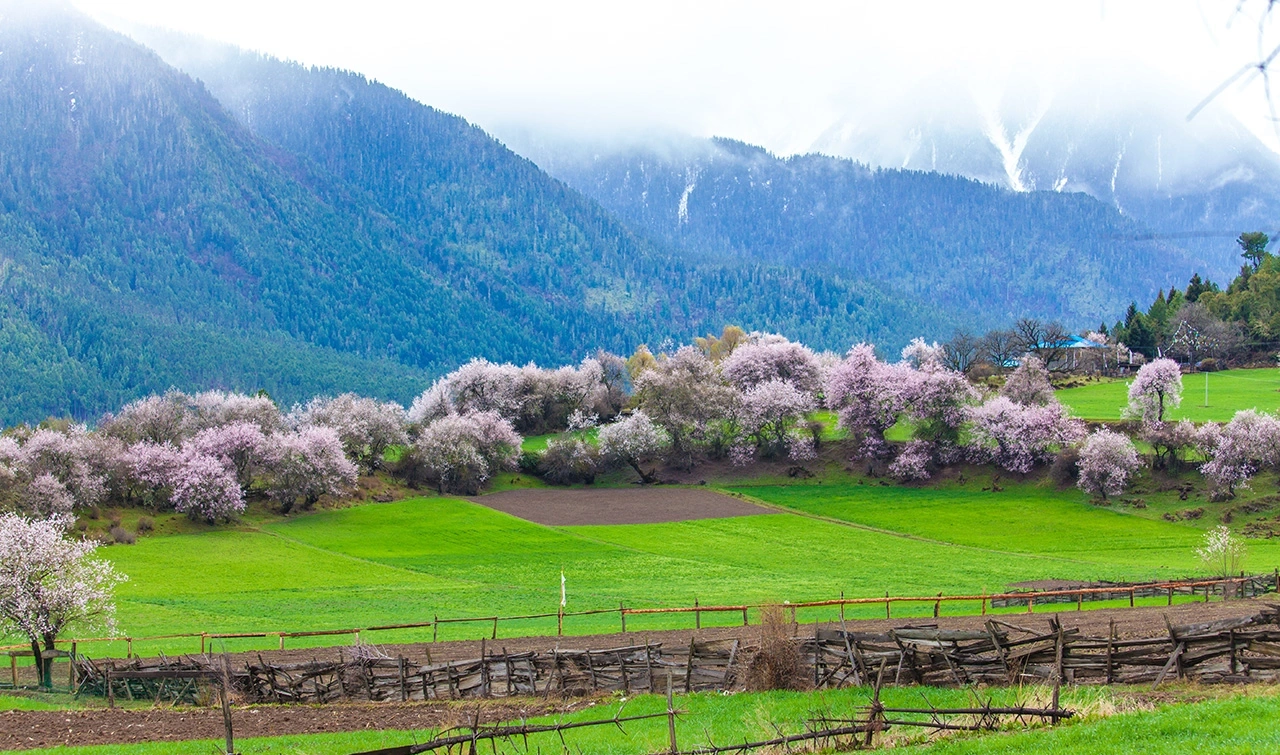
It was almost 3 PM when we got back to Bomi Town for dinner. We found a Yunnan-style cured pork rib hot pot restaurant online with good reviews, but when we arrived, we found they were out of cured pork ribs. We ended up having a lamb offal and lamb hot pot instead. I don’t know if it was because everyone was so hungry, but the hot pot was incredibly delicious, especially the lamb offal – one serving wasn’t enough, so we ordered another! After dinner, it was already past 4 PM. Tonight we were staying in Xumu, the deepest part of Taohuagou Valley, still over 100 kilometers away.
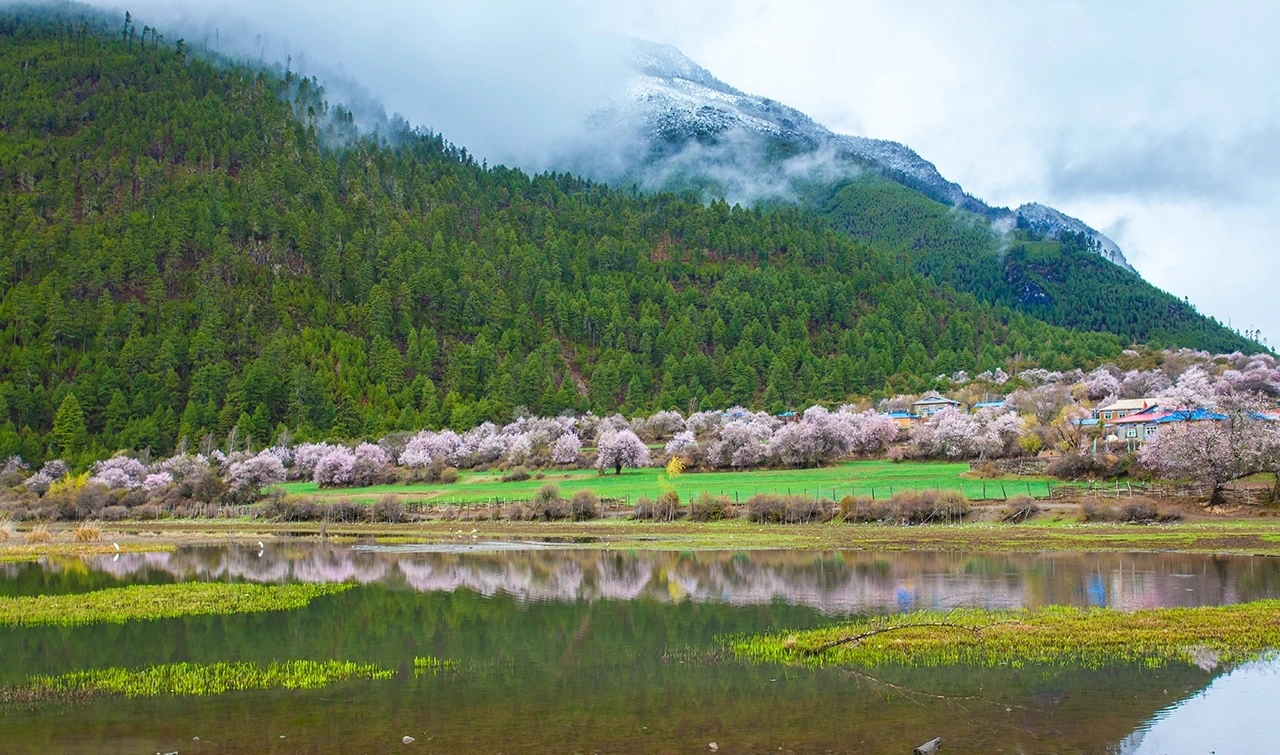
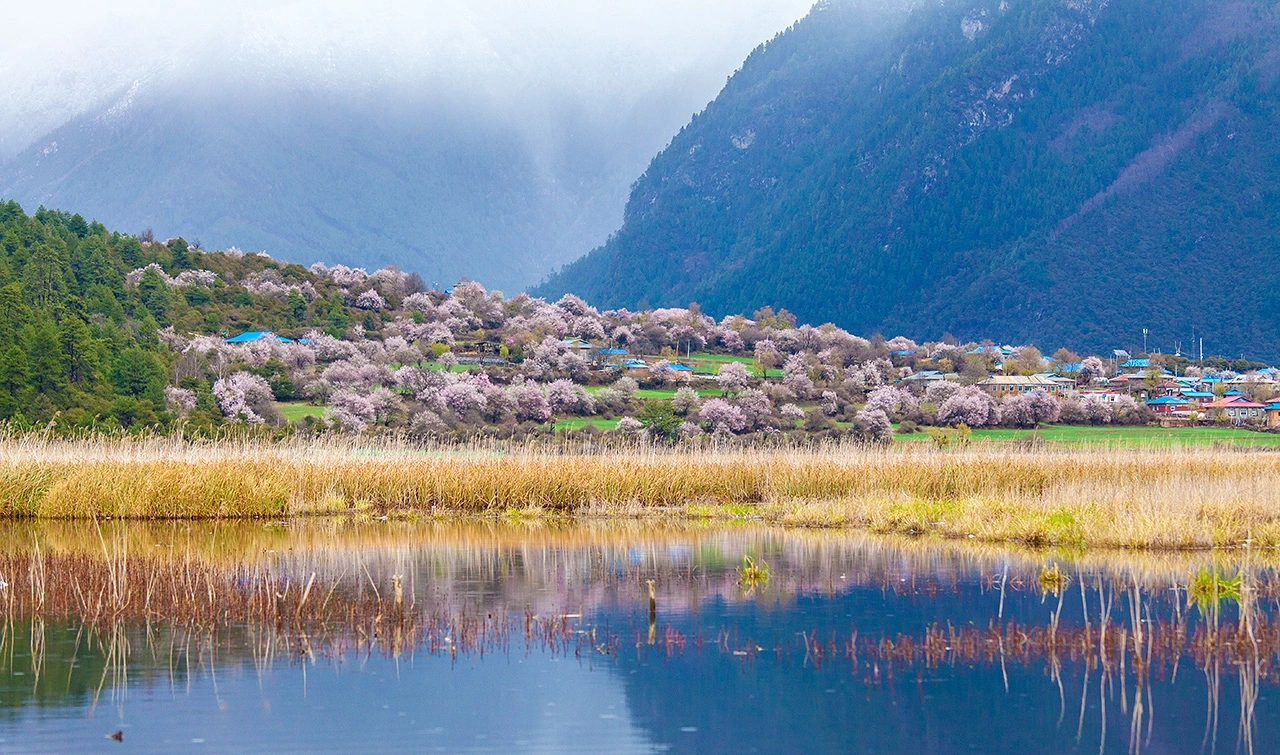
On the map, Galang Village’s Galang Scenic Area seemed to be a place we passed on the way to Xumu, but actually, they are two separate roads. Galang Scenic Area has a large gate; you need to buy a ticket to enter. Galang Scenic Area is also a Tibetan village. At the end of the village is a lake full of wild fish. Several egrets stood quietly in the water, hunting for food. The lake and mountains blended together, and time seemed to stand still.
Xu Mu Restaurant
There was supposed to be the ruins of the Galang Dynasty here, but due to time constraints, we didn’t explore it further and quickly retraced our steps to delve deeper into another peach blossom valley, heading towards our destination for the day: Xumu Fish Village!
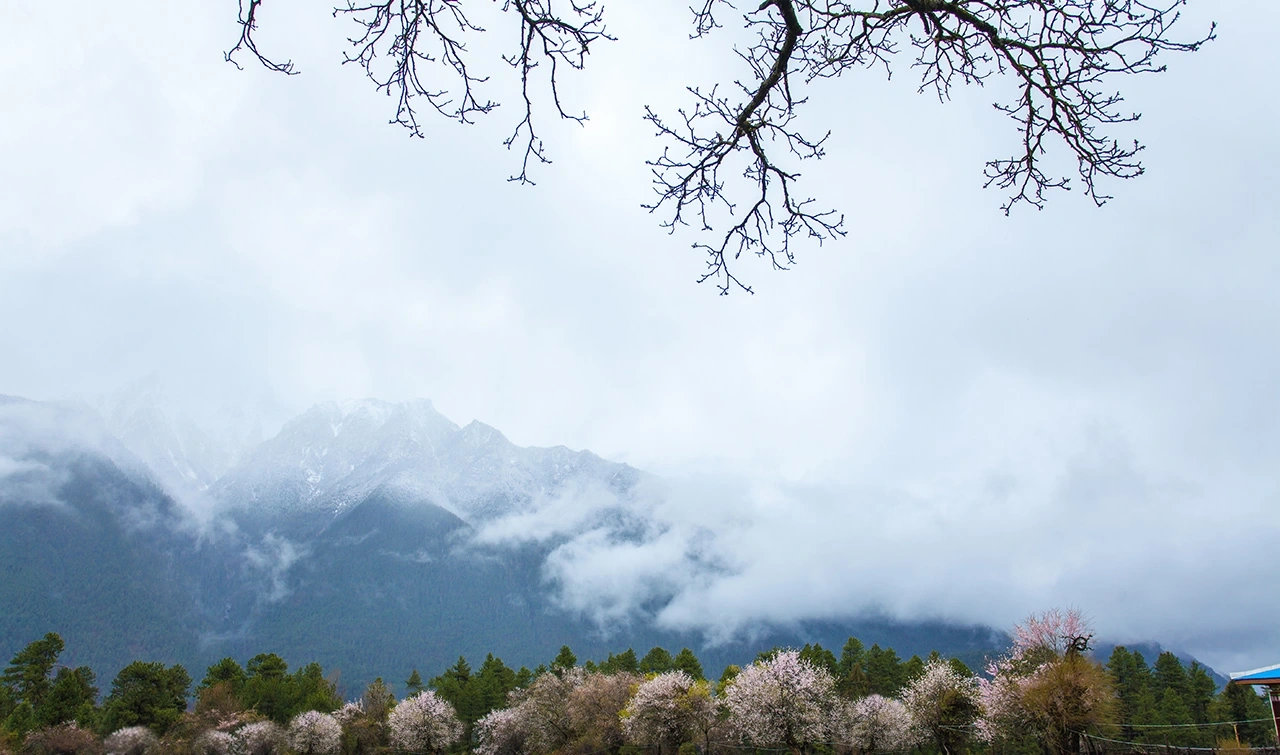
Once we actually entered the peach blossom valley, we realized that the peach blossoms in Gala Village, which we visited on our first day, were quite ordinary. The valley was covered in peach blossoms, blooming along the hillsides, and the roadsides were also adorned with delicate pink blossoms. The misty rain and cloud-shrouded mountains created a breathtakingly beautiful scene, and we were completely captivated. Time didn’t allow us to linger on the scenery; we had to remember the most beautiful spots and come back tomorrow!
Xumu Village was where we would be staying for the day. The owner had given his fish village a grand name, “The Maldives of Bomi,” which refers to a polygonal building constructed in the middle of a fishpond. We assumed there would be hot water for showers, but having not showered for three days and considering the conditions of the previous night, we felt quite unwell.
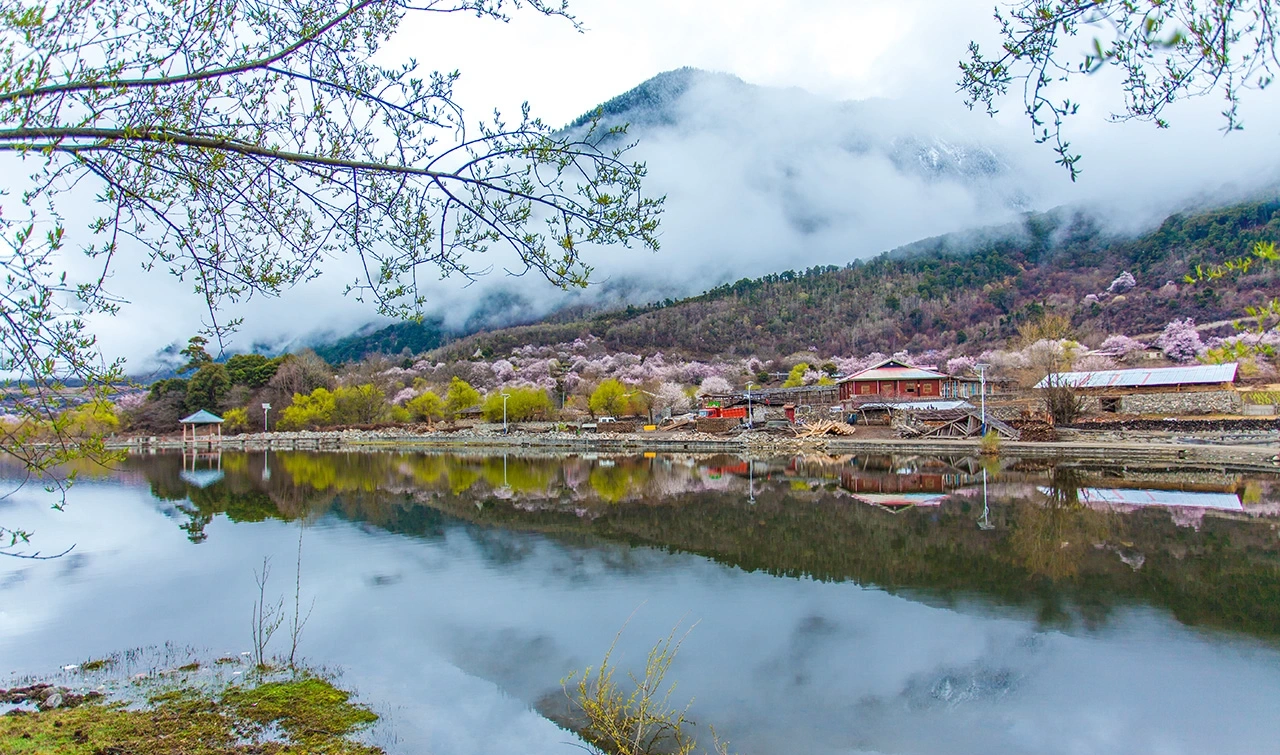
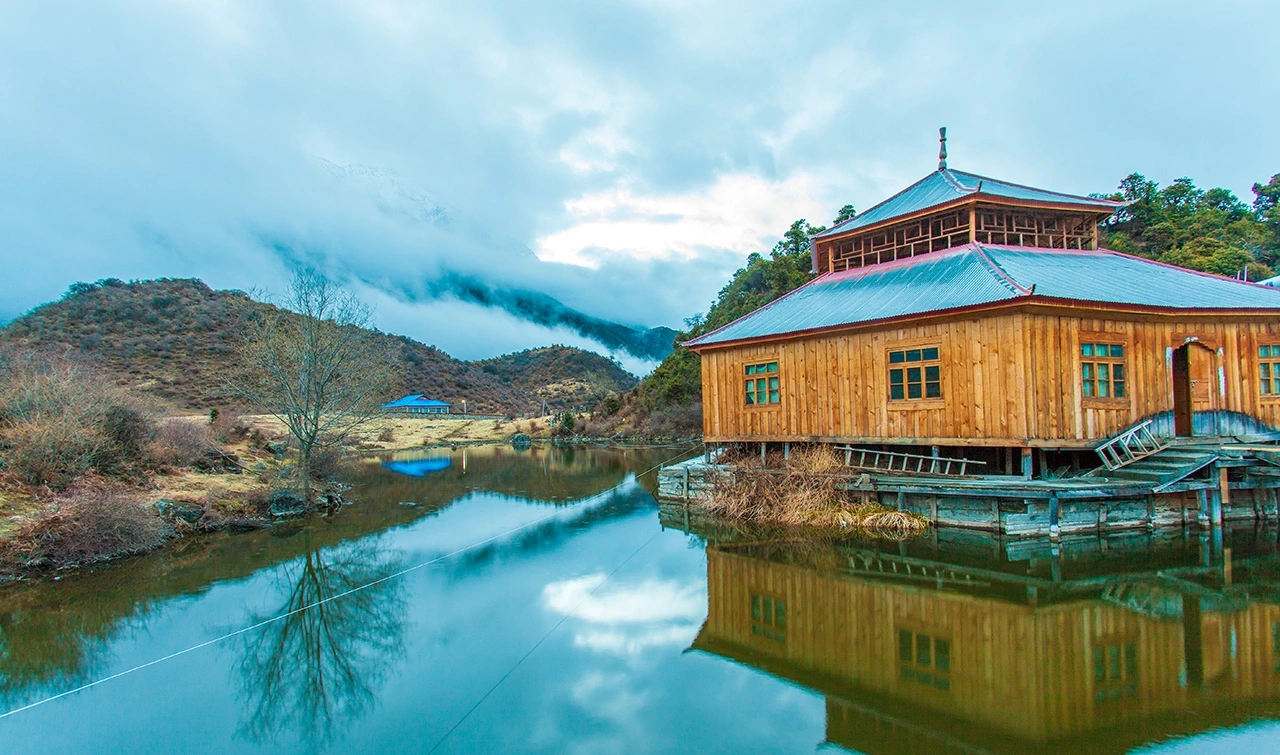
The owner of Xu Muyu Restaurant and our driver, Mr. Zhou, are from the same hometown, so they were exceptionally hospitable to us. After cooking, they chatted with us. The owner told us that the flowers in the Bomi area are starting to bloom one after another, first the peach blossoms, then the azaleas, and then a kind of flower that the locals call prickly plum, which will last until June.
I learned last night that it snowed at Ranwu Lake. I wonder if it’s still snowing after a night, and if the roads are easy to travel on. Today, the weather is really uncooperative; the rain is quite heavy, and many of the scenic spots I wanted to visit yesterday are no longer worth staying at.
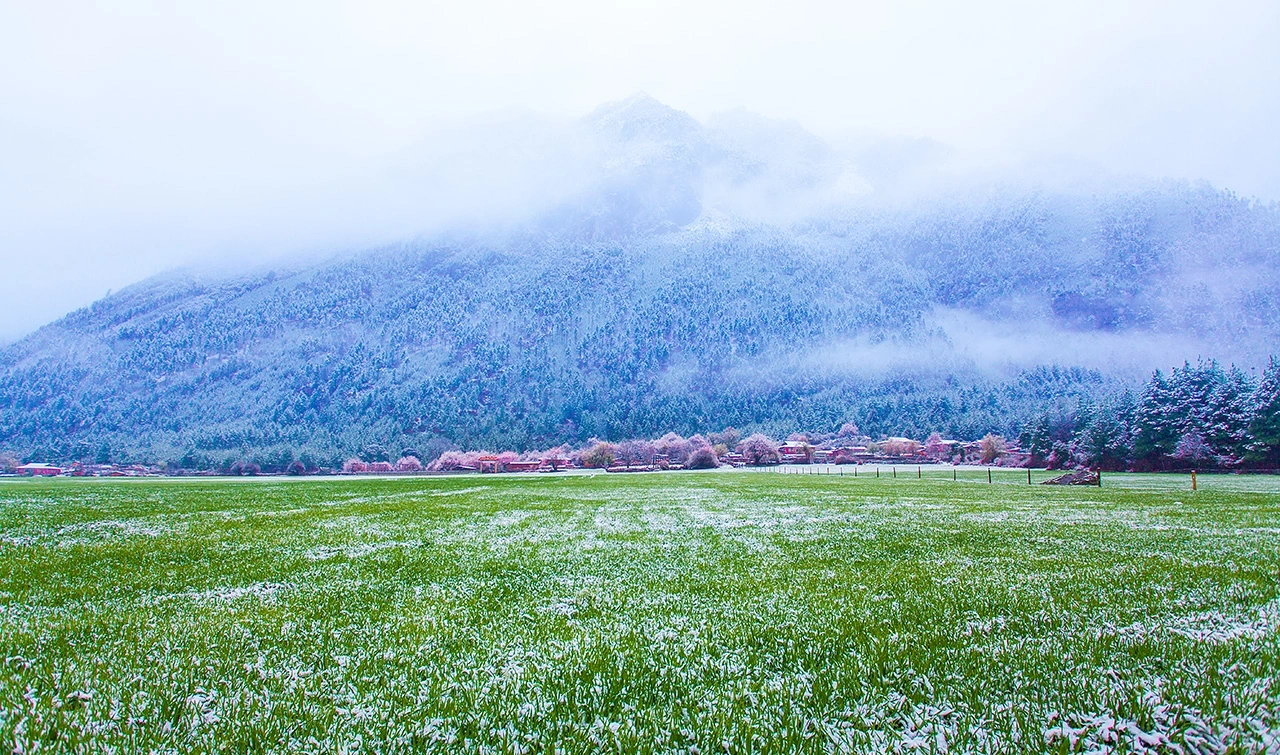
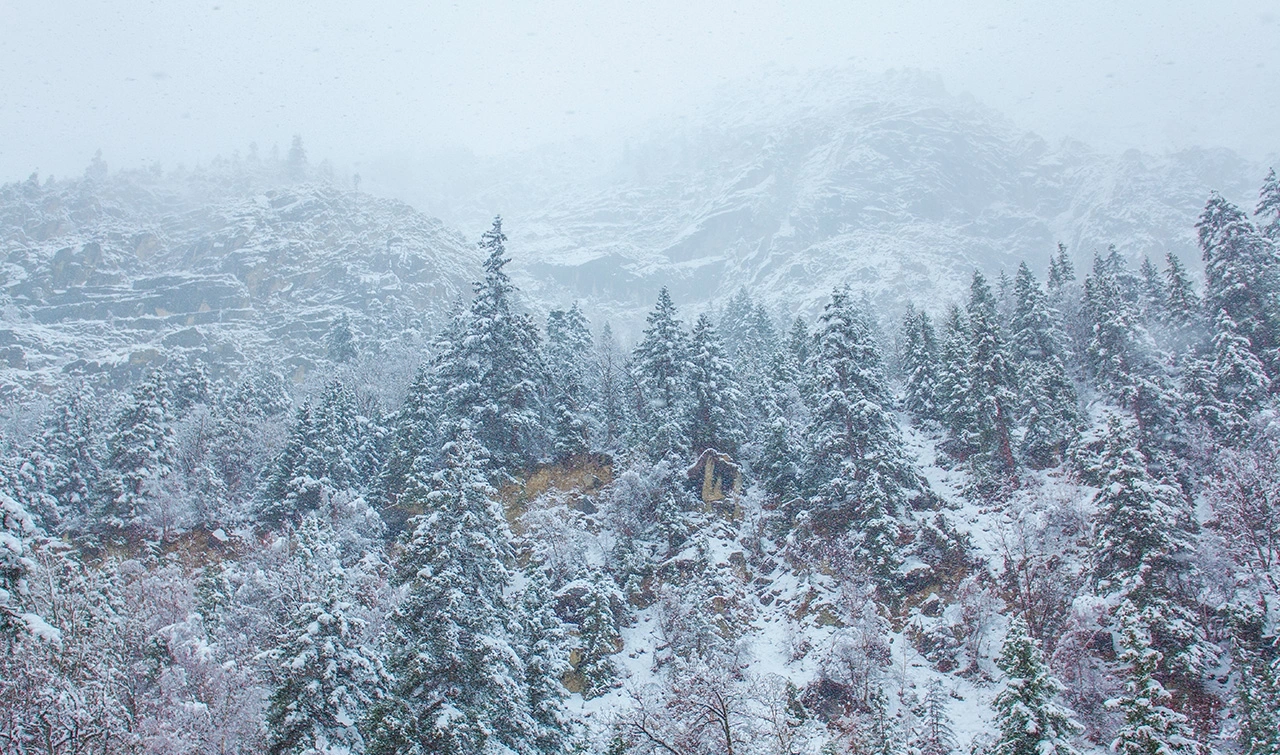
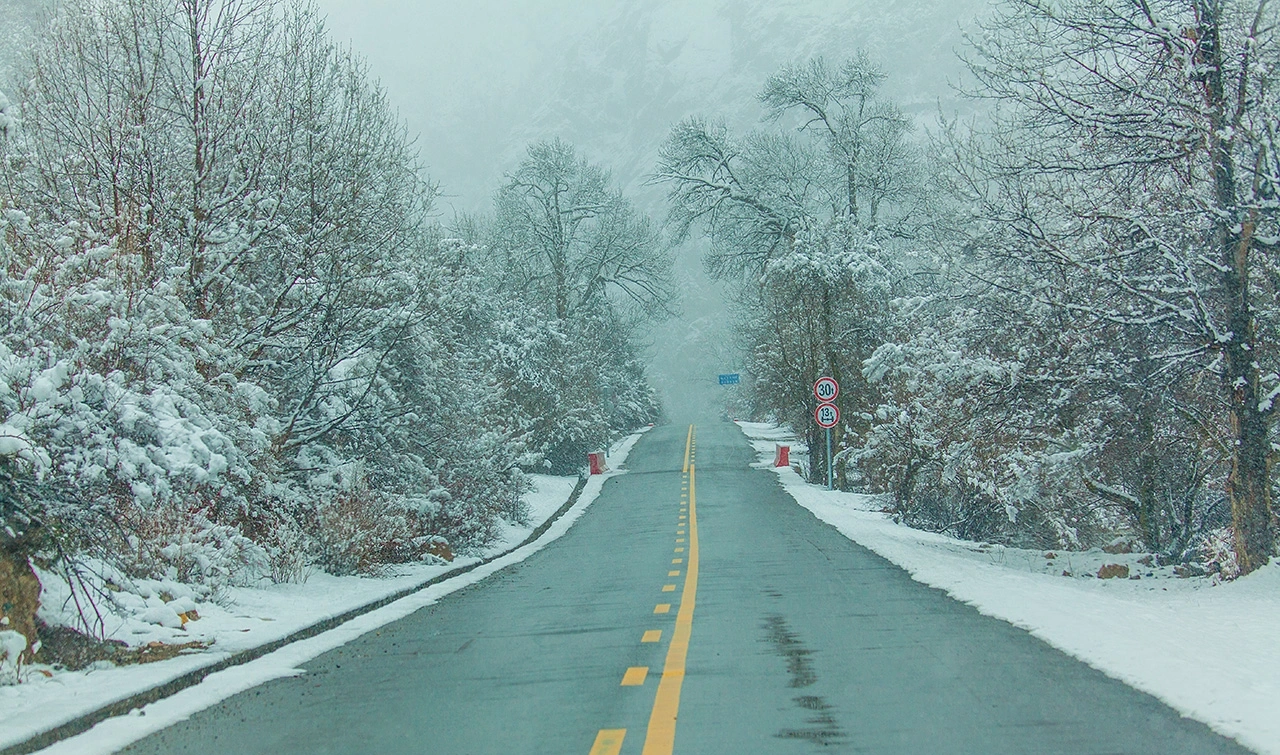
When the rain turned to snow, we were already above 3,000 meters in altitude. The spruce trees on both sides of the road were covered with snow. By the time we reached 4,000 meters, it was a heavy snowfall. I hadn’t seen such heavy snow in many years. Thinking about it, this trip was really interesting; you can experience all four seasons in one day.
Ranwu Lake
Ranwu Lake is seen by Tibetans as “a tear fallen from the sky.” The lake’s waters resemble a tear that has slid down from the heavens, utterly still and silent, like a woman frozen in time, her heart no longer stirred by emotion. Ranwu Lake is renowned for its tranquility and azure waters; very few withered branches or debris are visible in its depths, and the surrounding scenery varies greatly. Depending on the season, the lake displays several colors, including azure and turquoise. Ranwu Lake is the source of the Parlung Tsangpo River, a tributary of the Yarlung Tsangpo River. Legend has it that a water buffalo lived in the lake, and a yellow ox lived on its shore. They fought fiercely, and after their deaths, they transformed into mountains, with Ranwu Lake nestled between them.
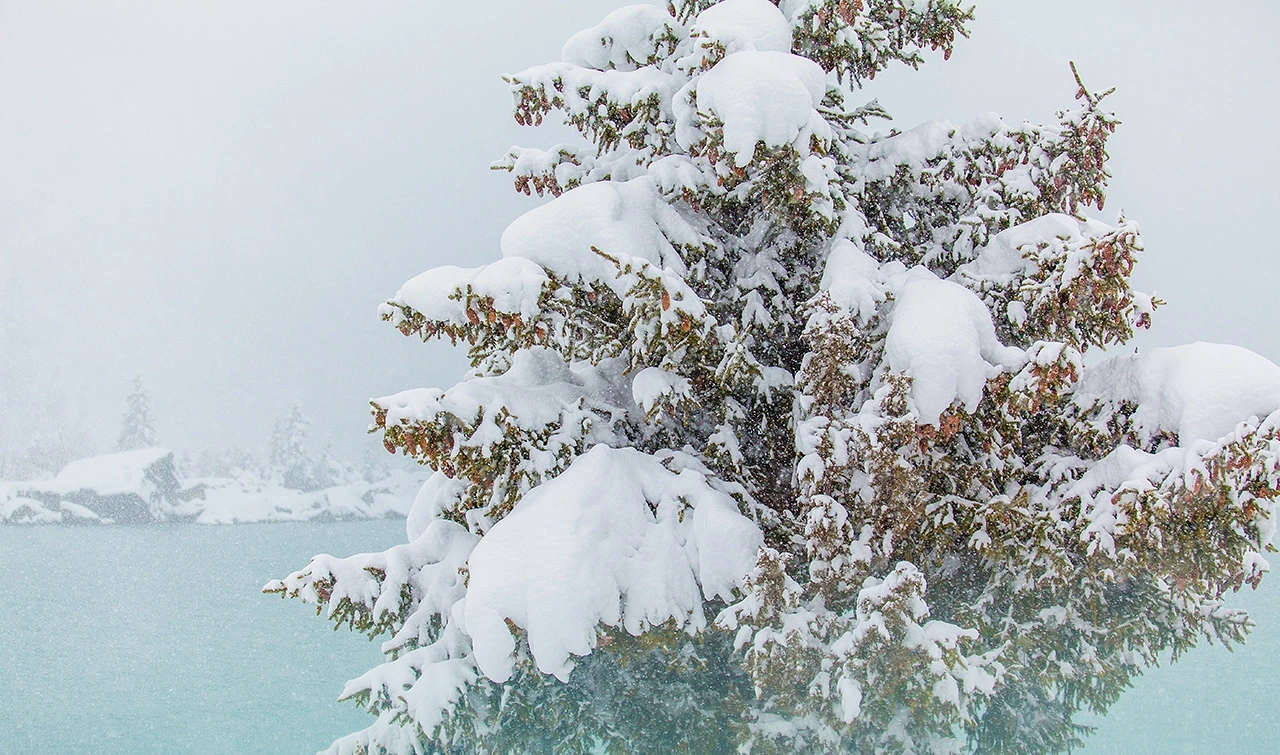
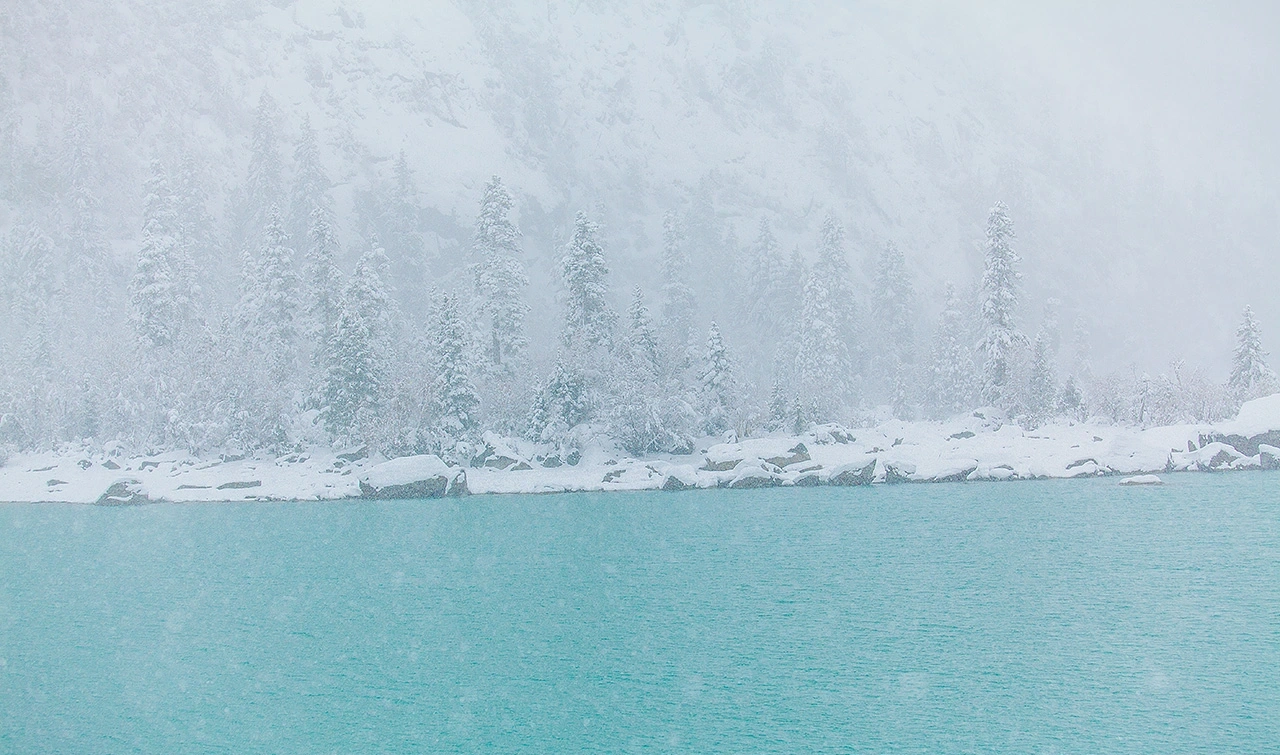
As night fell, our trip to Nyingchi came to a perfect end. These few days fulfilled our long-held dream of springtime in Nyingchi. We experienced the cycle of the four seasons: spring blossoms, autumn moon, summer rain, and winter snow. The journey was full of challenges, but no matter how great the difficulties, we faced them with joy—just as life should be!