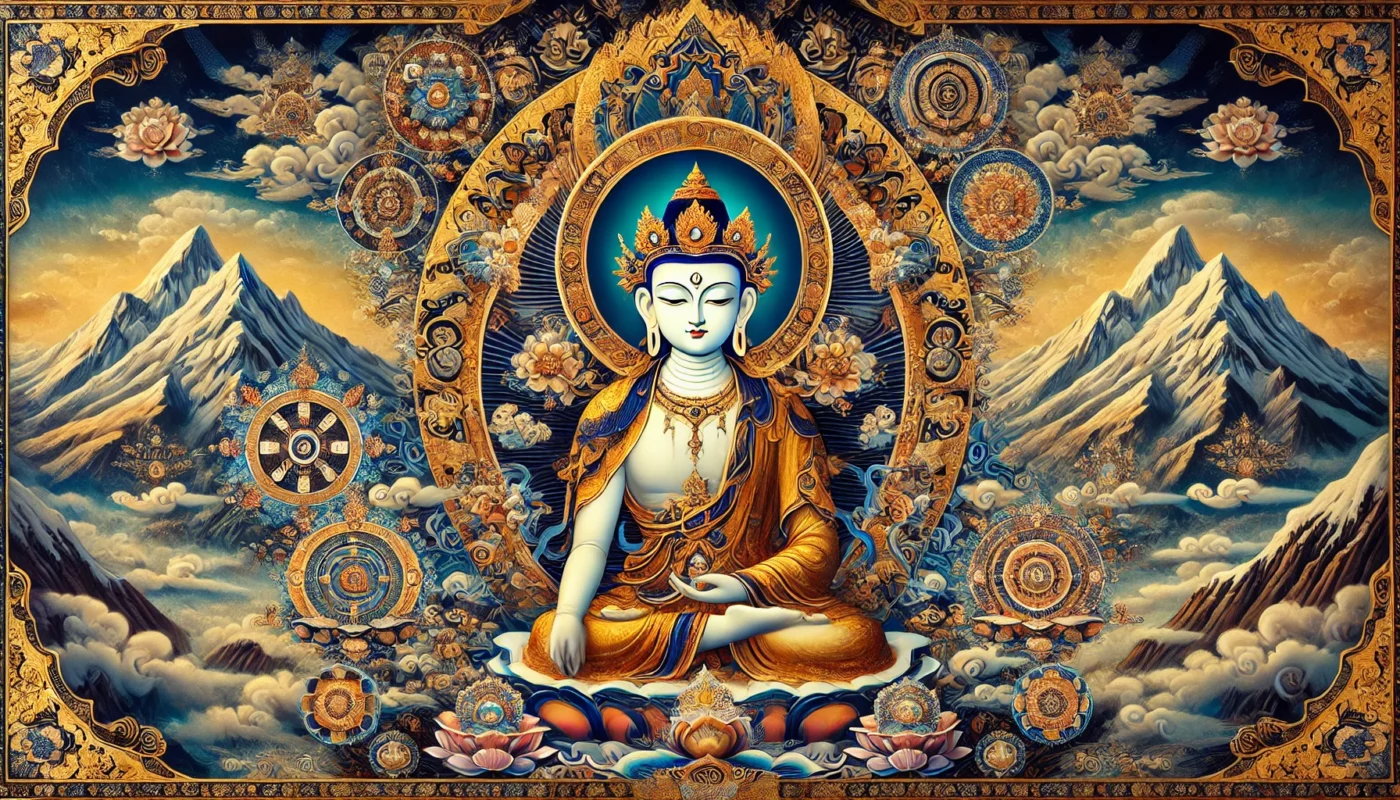
Tibetan and Nepalese Thangka paintings are two distinct traditions within Himalayan Buddhist art, each shaped by different cultural, religious, and artistic influences. While both use similar materials and share common iconographic roots, the two traditions have developed recognizable differences in style, technique, and cultural context. This guide compares the two traditions across historical origins, materials, symbolism, and artistic characteristics.
Historical Origins
Tibetan Thangka art developed after Buddhism was introduced to Tibet in the 7th century, influenced by Indian Buddhist art and techniques brought by scholars such as Padmasambhava. Over centuries, it developed its own iconographic conventions rooted in Tibetan Buddhist cosmology.
Nepalese Thangka art, particularly the works of the Newar community, traces its origins to an earlier period and blends Hindu and Buddhist traditions. The Kathmandu Valley served as a hub of religious and cultural exchange, contributing to a distinctive Nepalese style that incorporates both Buddhist and Hindu motifs.
Materials and Techniques
Both Tibetan and Nepalese Thangkas are painted on cotton or silk canvas using mineral-based pigments. Tibetan painters follow strict iconometric guidelines and often train as part of monastic education. Nepalese painters, especially from the Newar community, are renowned for intricate brushwork and frequent use of gold leaf to add richness and detail.
Symbolism and Iconography
Tibetan Thangkas follow iconographic conventions rooted in Vajrayana Buddhism, depicting deities, mandalas, and Buddhist narratives with precise symbolic rules. Colors, positions, and attributes carry specific meanings within the Tibetan Buddhist tradition.
Nepalese Thangkas similarly use symbolic imagery but often include Hindu deities alongside Buddhist figures, reflecting the religious overlap common in Newar culture. This gives Nepalese Thangkas a broader visual vocabulary that blends two traditions.
Artistic Style Differences
Tibetan Thangkas typically emphasize structured compositions, symmetrical layouts, and adherence to traditional iconography. Nepalese Thangkas tend toward more intricate decorative detail, richer use of gold, and a more ornamental aesthetic that appeals to both collectors and practitioners.
Use and Function
In Tibetan contexts, Thangka paintings serve as visual aids in teaching, meditation support, and ritual display in monasteries. Their portability made them useful for traveling monks and lay practitioners across the Himalayan region.
In Nepal, Thangkas serve both religious and ceremonial functions. They are used in temple displays, personalaltar corners, and as offerings. The tradition also produces works specifically for collectors and the international art market.
Identifying Authentic Works
Authentic Tibetan Thangkas are typically marked by traditional iconography, natural mineral pigments, and inscriptions or seals indicating origin. Nepalese Thangkas are recognized by their intricate detail, gold leaf work, and the blending of Buddhist and Hindu imagery. Both benefit from provenance research and consultation with established dealers.
Both Tibetan and Nepalese Thangka traditions represent centuries of Himalayan artistic achievement. Understanding their differences — in origins, materials, symbolism, and function — deepens appreciation for each tradition and helps collectors and enthusiasts make informed decisions.