
Tibet is a land where spirituality isn’t merely a part of life—it is life itself. Here, religion and daily existence are so deeply intertwined that it’s almost impossible to distinguish between the two. Tibetan Buddhism, with its rich tapestry of rituals, prayers, and sacred symbols, is woven seamlessly into the everyday actions of Tibetans. From the moment the sun rises over the snow-capped mountains to the stillness of nightfall, religion shapes the way people live, think, and interact with the world.
Morning Mantras and the Sacred Sound of Devotion
For Tibetans, the day begins not with a rush to the markets or a check on the phone, but with prayer. As dawn breaks, many Tibetans rise early to recite mantras, the rhythmic chants that echo through their homes and monasteries. The sound of these prayers, often accompanied by the turning of prayer wheels, fills the air and sets the tone for the day. It’s not just about reciting words—it’s about invoking blessings, aligning one’s spirit with the universe, and offering gratitude for another day.
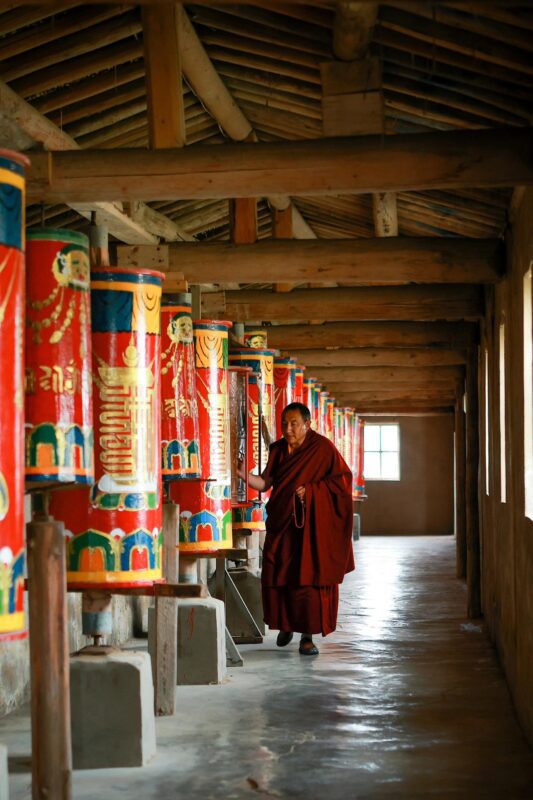
The prayer wheel—an iconic symbol of Tibetan Buddhism—is more than just a spiritual tool; it’s a daily companion. Tibetans spin these wheels while walking through their neighborhoods, on their way to work, or while completing their daily chores. Each turn releases blessings, as if sending positive energy into the cosmos with every revolution. This small but powerful act connects them to the sacred, even in the most mundane moments.
The Kora: Walking the Path of Devotion
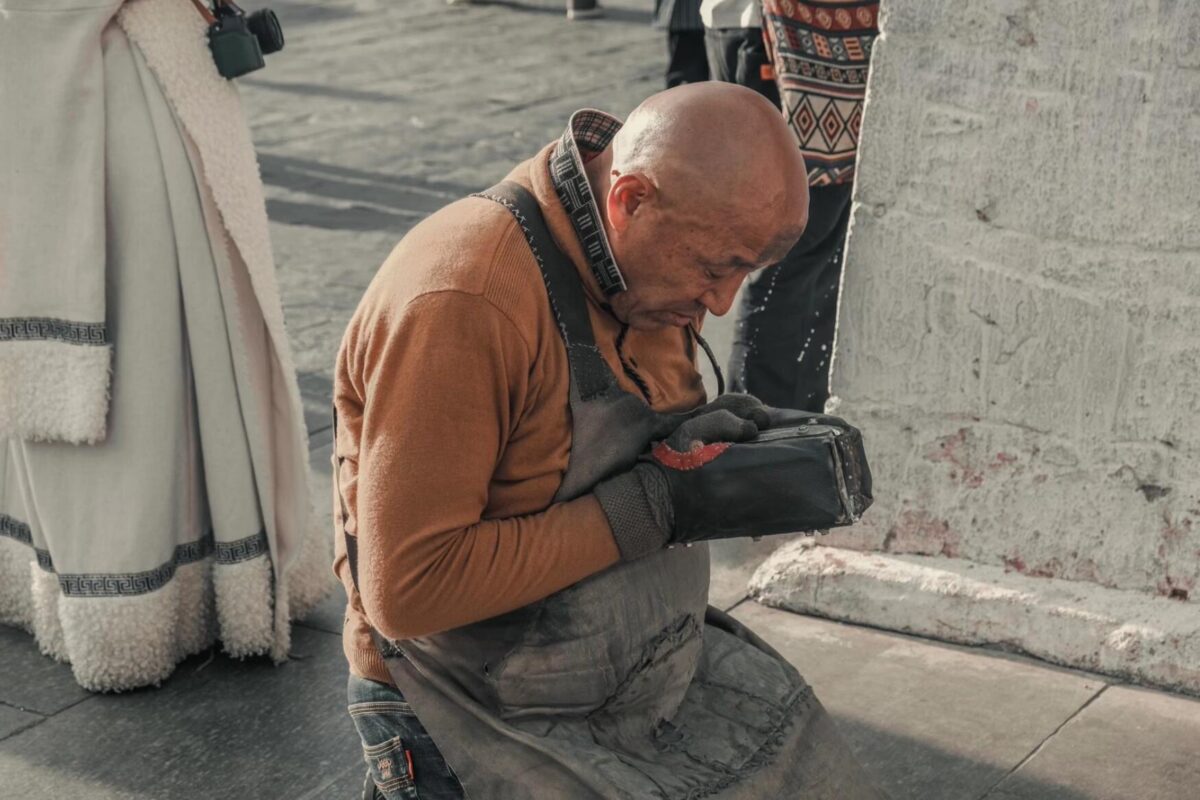
In Tibetan culture, walking isn’t just a physical activity; it’s a form of worship. The kora, a sacred circular walk around a religious site, is a deeply embedded practice. Whether it’s around a monastery, a stupa, or the majestic Mount Kailash, the kora is more than a path—it’s a spiritual journey. As Tibetans walk in silence, turning their bodies in harmony with the earth and the heavens, they feel a sense of alignment with the divine.
Every step taken during a kora is a prayer, a reminder that spirituality is not confined to temples or sacred texts but is present in every movement. Pilgrims often complete these circuits barefoot, allowing the earth’s energy to flow directly into their beings, grounding them in the sacredness of the moment.
Chanting and Prayers: The Soundtrack of Tibet
Throughout Tibet, the sound of prayer isn’t confined to the monasteries. It spills out onto the streets, blending with the hum of daily life. Tibetans chant mantras, not just during designated prayer times but whenever they can—while walking, cooking, or cleaning. The repetition of these sacred sounds serves as a reminder of their faith, a subtle thread that connects them to a higher purpose throughout the day.
One of the most popular mantras, Om Mani Padme Hum, is repeated countless times, believed to purify the mind and heart. The words themselves are a meditation, and their sound is as sacred as the meanings they convey. Even children, as young as five or six, are often taught to recite these mantras, incorporating them into their daily routines from a young age.
Pilgrimages: Spiritual Journeys Across the Land of Snows
Perhaps one of the most profound ways that religion integrates with everyday life in Tibet is through the concept of pilgrimage. Pilgrimage isn’t just a one-time event in Tibet; it is a continuous journey—spiritual and physical—across the sacred landscape. Every year, Tibetans embark on pilgrimages to some of the holiest sites in Buddhism, such as Lhasa’s Potala Palace or the towering Mount Kailash. But pilgrimage isn’t limited to these famous locations. Everyday Tibetans regularly visit local temples, holy lakes, and shrines, where they offer prayers, light butter lamps, or make prostrations.
But what’s remarkable is that for Tibetans, the journey to these sacred places is not about ticking off a box or completing a set ritual. It’s about transformation. Whether it’s walking around the Potala Palace or trekking the treacherous path to Mount Kailash, every step of the journey is an act of faith, a reminder of the impermanence of life and the sanctity of the universe.
Integrating Religion in the Everyday
Religion is not an afterthought or a separate part of life for Tibetans—it’s the very lens through which they experience the world. From the moment they wake up, Tibetans find ways to integrate their faith into their daily routines. Whether it’s through chanting, offering incense, or performing acts of kindness, every moment is infused with religious significance.
Even seemingly ordinary actions, like offering food to guests or helping a neighbor, are seen as opportunities to accumulate merit, a concept in Tibetan Buddhism that represents the good karma one earns through virtuous deeds. This seamless fusion of the sacred and the mundane is what makes Tibetan life so unique—religion is not compartmentalized but is the thread that binds everything together.
Conclusion: A Life Divinely Guided
In Tibet, religion and daily life are inseparable. From the early morning prayers to the act of walking in devotion, Tibetans carry their faith with them in everything they do. Their rituals, though rooted in ancient traditions, are not mere acts of the past; they are living, breathing practices that shape their daily existence. In a world increasingly disconnected from spirituality, Tibet serves as a powerful reminder that every moment can be sacred, and every action, no matter how small, can carry profound meaning.
As Tibetans continue to walk their spiritual path, they remind us all that faith is not just a belief—it is a way of life.