The sight of Potala Palace from a distance—its majestic silhouette perched high upon Red Mountain—was one I will never forget. Standing at the foot of the mountain, I gazed upward, feeling both insignificant and awestruck. Tsering, ever patient, stood beside me, his eyes twinkling as he saw the wonder in my expression.
“Many people come to Tibet seeking enlightenment or solace, but few leave without being profoundly changed,” he said softly, his voice almost drowned by the bustle of the city around us. “Potala is not just a building; it is a living symbol of Tibet’s soul.”
We began our ascent towards the palace, the path winding upward through narrow streets lined with prayer wheels and fluttering prayer flags. The air grew thinner with every step, and though I had already acclimatized to Lhasa’s altitude, there was an undeniable sense of challenge in the climb. Yet, as my legs grew weary, the allure of the Potala Palace only intensified. I could feel the weight of its history in every step, a history woven from centuries of spiritual devotion, political power, and enduring resilience.
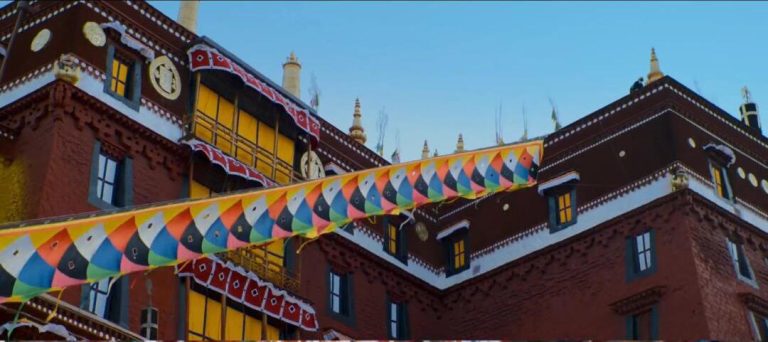
Upon reaching the base of the palace, the view was simply overwhelming. Potala Palace, with its white and red walls, stood against the backdrop of the vast blue sky. It was a fortress, a monastery, a seat of power all in one—its intricate architecture blending with the natural landscape so harmoniously that it felt as though it had always belonged there, a part of the very earth itself. The sheer scale of the building—13 stories high, with over 1,000 rooms—seemed to dwarf everything around it. I could feel the pulse of history in the air, as though the very stones whispered the secrets of generations past.
Inside, the Potala Palace revealed itself to be both a place of worship and a historical treasure trove. The halls were lined with golden statues, frescoes depicting the life of the Buddha, and intricately designed thangkas—each one a masterpiece in its own right. I was struck by the contrast between the somber silence of the palace and the vibrant energy of the pilgrims who came to pay their respects. Every corner of the palace seemed to hold a story—of the Dalai Lamas who had once resided here, of Tibet’s tumultuous history, and of the faith that has held this land together through centuries of hardship.
Tsering led us through the rooms, explaining the significance of each. “This is the place where the Dalai Lamas would give their teachings,” he said as we passed a grand assembly hall adorned with intricate murals. “The Potala is not just a physical structure; it is a spiritual beacon, drawing people from all over the world. Here, it is said that the mountain itself is sacred, and the palace was built as a place to house the wisdom and power of the Dalai Lamas.”
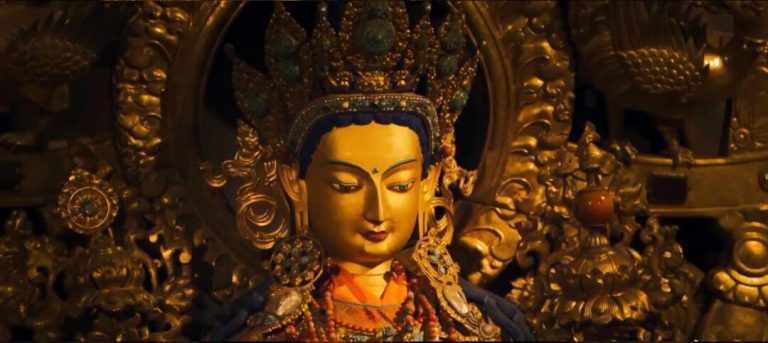
As I wandered through the rooms, I couldn’t help but feel a sense of reverence for this place. The walls seemed to hum with the energy of centuries of prayer, devotion, and meditation. I paused in front of one of the golden Buddha statues, its serene expression inviting contemplation. The air was thick with incense, and the flickering light from butter lamps cast soft shadows that seemed to dance on the walls. It was a place where time felt suspended, where the past and present merged into one, and where the sacred was woven seamlessly into the fabric of daily life.
But it was when we reached the roof of the Potala that the true magic of the place became clear. From this vantage point, the entire city of Lhasa sprawled beneath us, its rooftops and streets bathed in the golden glow of the setting sun. The view of Red Mountain, with its craggy peaks and lush valleys, stretched far into the horizon, a reminder of the vastness and beauty of this land. The Potala, with its ancient walls, seemed to stand as a guardian over the city, its presence both imposing and reassuring.
As the sun dipped lower, the city below seemed to come alive in a new way. The shadows grew longer, and the cool evening air carried with it the faint sound of prayer bells and distant chanting. The city had a rhythm, a pulse that was both ancient and modern, a harmony that seemed to echo in the hearts of all who called it home.
Tsering spoke again, his voice full of awe. “At night, Potala takes on a completely different energy. It’s like the palace itself breathes with the rhythm of the universe.”
I could see what he meant. As the last rays of the sun disappeared behind the mountain, the Potala Palace was bathed in a soft, ethereal glow, the lights from within flickering like distant stars. The city below seemed to quieten, as though the entire world was holding its breath in reverence. I stood there for a long time, watching as the palace transformed, its massive walls lit up in the night, casting long shadows across the city.
We descended as the night deepened, making our way back through the streets. The city was quieter now, the bustle of the day replaced by the peaceful sounds of the evening. I felt a profound sense of peace, as though the day’s journey had opened something inside me—a deeper understanding of the place, of its history, and of the faith that sustained it.
Tsering’s words echoed in my mind as we walked: “The Potala Palace is more than just a building. It is the soul of Tibet, a place where the past, the present, and the future converge.” As I looked back one last time at the silhouette of the palace against the night sky, I realized that it was true. Potala Palace was not just a place—it was an experience, one that would stay with me long after I left Tibet.