There’s something almost mythical about Lhasa, a city that seems to float between reality and reverie. I had heard its name echo in stories, seen it etched in the fervent prayers of travelers, and yet, nothing truly prepared me for the moment I first set foot on Tibetan soil. The air was thinner than I expected, almost as if the sky itself had decided to draw closer, making each breath feel like a small victory. It was the first time I had felt the weight of altitude pressing down on me, and yet, in this moment, nothing else mattered. I was here, in the heart of Tibet, where every stone and every shadow seemed to tell a story.
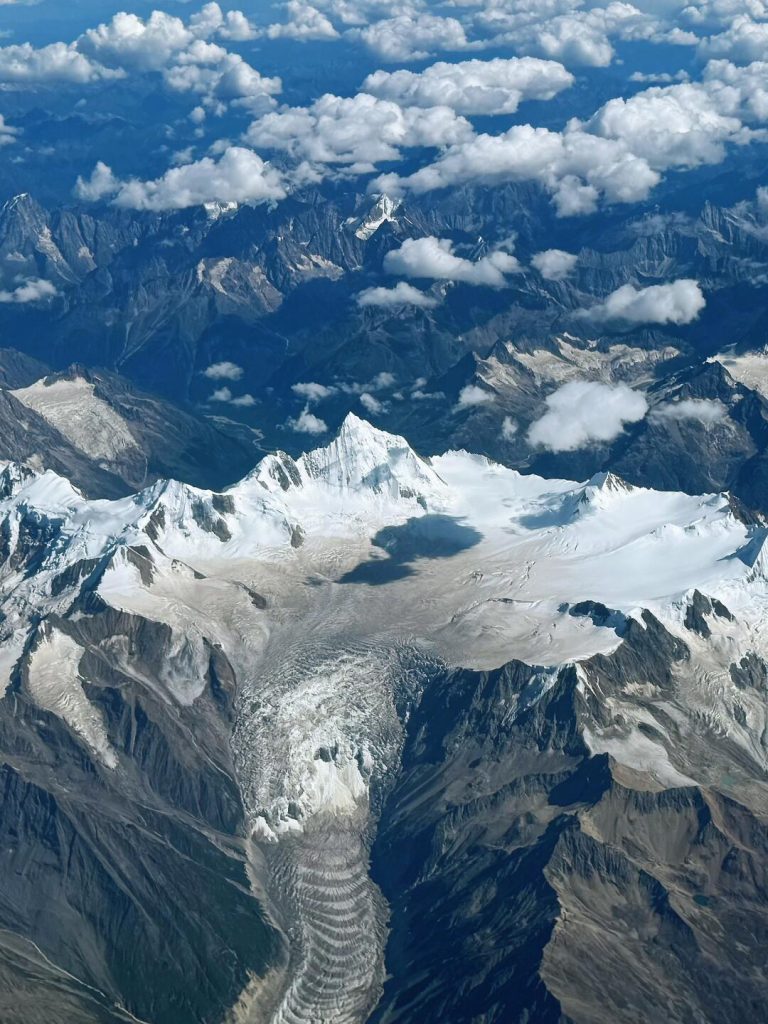
The journey to Lhasa had been long, and as our plane descended toward the high plateau, the view from my window was nothing short of otherworldly. Below, the vast expanse of the Tibetan Plateau stretched endlessly, dotted with patches of snow and jagged mountain peaks that seemed to pierce the sky. For a moment, it felt like I was flying into a dream. The mountains—silent, ancient, and immovable—seemed to beckon me, their presence both humbling and awe-inspiring. But the real challenge lay ahead: the moment the plane touched down and I stepped into the thin air of Lhasa.
Tsering, our guide, had warned us about the altitude sickness that many visitors experience, but I had underestimated how dramatically the change in elevation would affect me. The sunlight was sharper, almost harsher, as if the sun itself had been turned up a few notches to compensate for the altitude. And then, there was the air—so thin that each inhalation felt like I was gulping in half the air I needed. As I stepped off the plane, a wave of dizziness threatened to overwhelm me, but it was nothing compared to the overwhelming beauty of the city that awaited.
Lhasa greeted us with the promise of peace and adventure, a city where the sacred and the mundane coexist in an extraordinary balance. The streets were alive with the rhythm of prayer wheels turning, the soft murmurs of pilgrims whispering their mantras, and the faint scent of incense that seemed to linger in every corner. It was a place that felt at once both foreign and familiar, a land where faith and daily life intertwined with seamless grace.
We spent the afternoon walking through the old town, where the sounds of bargaining in Tibetan and the gentle clinking of prayer beads created a melody all their own. It was here that I first felt the weight of Lhasa’s spiritual aura. I found myself stopping at every corner, drawn by the glow of butter lamps in shop windows, the intricate carvings of Buddhist deities on the doors, and the weathered faces of the elderly pilgrims who seemed to walk with a wisdom that could only be gained from a lifetime of devotion.
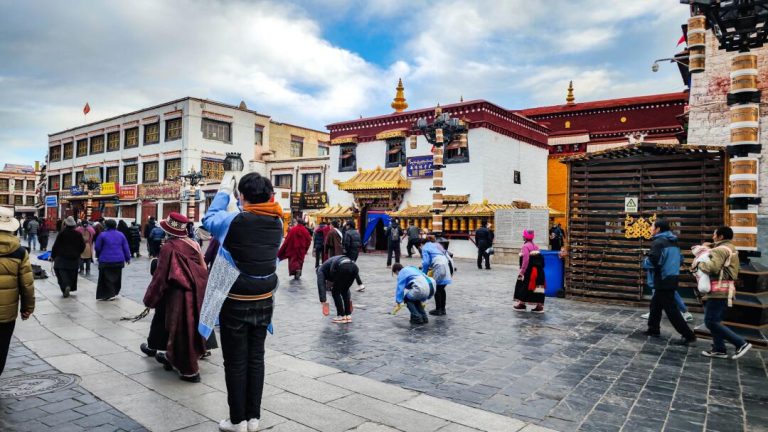
As Tsering led us towards our first stop—the Jokhang Temple—I could sense my anticipation building. This was the heart of Tibetan Buddhism, the epicenter of spiritual devotion in Lhasa, and every corner seemed imbued with the weight of centuries. We were greeted by a crowd of worshippers, each of them focused on the task at hand: the physical and spiritual act of prostrating themselves before the temple’s sanctum. The air inside was heavy with the fragrance of incense, and the flickering shadows cast by the butter lamps created a sense of mysticism that felt almost tangible.
Tsering, ever the patient guide, explained the significance of the temple, but his voice seemed to fade into the background as I stood in awe of the space. Every painting, every statue, every prayer wheel seemed to radiate a quiet power that filled the room, pulling me deeper into the rhythm of Tibetan life. In that moment, I felt a profound sense of belonging, not as a traveler or a tourist, but as a witness to something far greater than myself.
The first night in Lhasa was perhaps the most surreal of all. As the sun dipped below the horizon, the city was bathed in a soft, golden light. The shadows stretched long across the streets, and the mountain peaks beyond seemed to glow with an ethereal light. I stood at the edge of the Potala Palace, gazing up at its imposing silhouette against the backdrop of the setting sun. This was the fortress of Tibetan history, the symbol of its past and its enduring spirit. In the quiet of the evening, I could almost hear the whispers of history echoing in the walls.
I was overwhelmed, not just by the grandeur of Lhasa, but by its quiet strength. This was a place where time seemed to stretch and contract, where every corner held the imprint of history, and where faith was as much a part of the air as the altitude. As I turned to leave the Potala, Tsering caught my eye. “The city will change you,” he said, his voice low and reverent. And in that moment, I understood. Lhasa was not just a destination—it was a journey in itself, one that would continue long after I had left its sacred streets.