
If you’ve ever searched for dzi beads tibet, you already know: these ancient agate beads carry centuries of Tibetan tradition in every surface pattern. But with so many reproductions flooding the market, finding authentic Dzi beads and genuine Dzi bead talismans with real history — and knowing what you’re actually looking at — is harder than ever. This guide walks you through everything: the meaning behind the eye patterns, how to tell genuine Tibetan Dzi beads from fakes, and where to find authentic pieces you can trust.
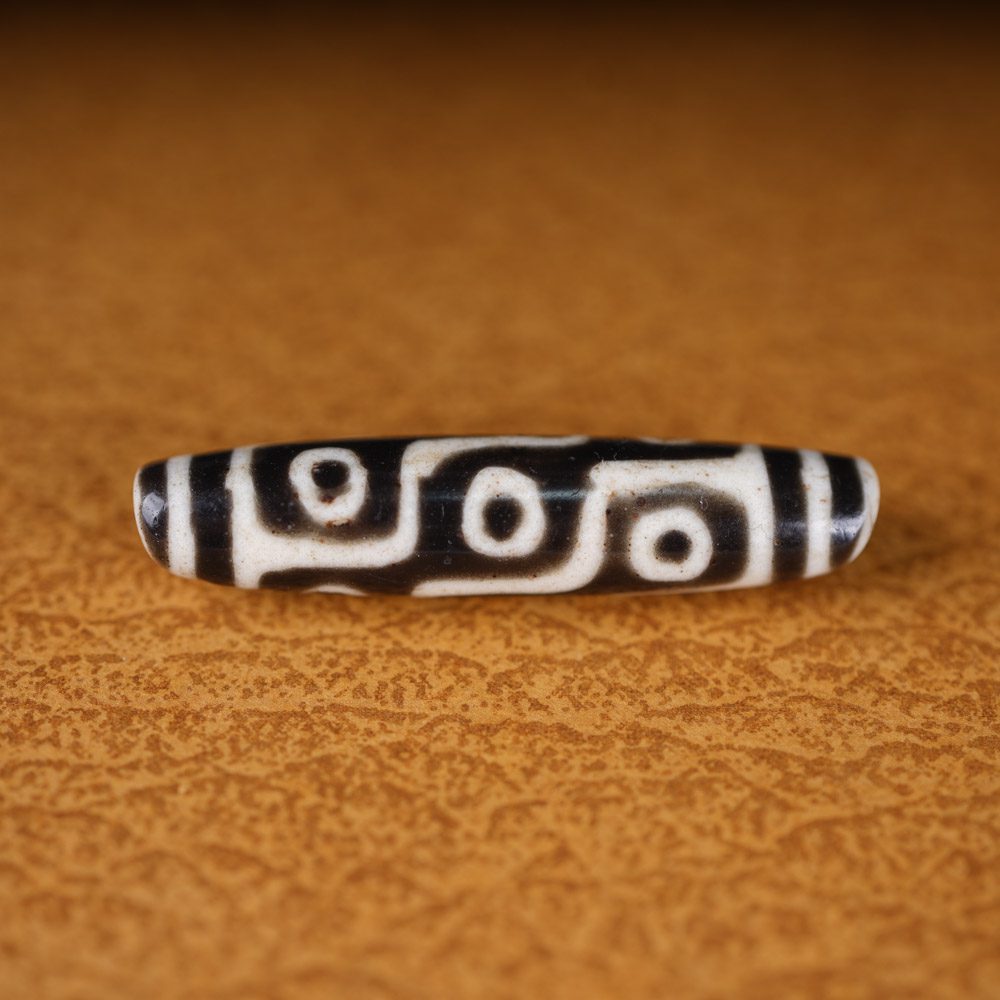
What Are Dzi Beads?
Dzi beads (pronounced “zee”) are traditional Tibetan bead forms crafted from natural stone — primarily agate, chalcedony, and carnelian. What sets them apart from ordinary stone beads is the distinctive pattern of raised “eyes” and symbolic motifs etched or naturally formed on their surface. These beads have been part of Tibetan and Himalayan material culture — often called “Heaven’s Beads” or “Sky Beads” in traditional folklore for centuries, circulating through trade networks that connected Tibet to Central Asia, South Asia, and China.
The word dzi ((Tibetan)) in Tibetan carries associations with brightness, splendor, and auspiciousness. For generations, these beads have been worn as personal ornaments, passed down within families, and exchanged on significant life occasions. Their value comes not from precious metal content but from their cultural meaning, material authenticity, and the craftsmanship behind each piece.
The History of Dzi Beads in Tibet
The exact origins of Dzi beads remain a subject of scholarly discussion — no single definitive source has been identified. What is known is that they traveled along the same trade routes that carried tea, silk, and spices between Tibet and its neighbors. Tibetan texts and oral traditions describe Dzi beads as objects of high status and protective significance within community life.
Written accounts from Himalayan regions note their use across a range of contexts:
- Ceremonial dress — worn during festivals and religious observances
- Family heirlooms — passed down through generations as treasured possessions
- Trade goods — valued across cultural boundaries for their distinctive appearance
- Protective amulets — carried for their symbolic association with good fortune and warding off negativity
Today, the tradition continues. Tibetan Dzi beads remain one of the most recognized forms of Himalayan jewelry, carried by collectors, spiritual practitioners, and anyone drawn to their quiet cultural resonance.
Dzi Beads by Eye Count: Complete Meaning Guide
The number of “eyes” on a Dzi bead is the primary way these beads are categorized. Each eye count carries traditional associations within Tibetan symbolic systems. Here is the full reference:
| Eye Count | Traditional Meaning | Rarity |
|---|---|---|
| 1 Eye | Single-minded focus, clarity of purpose — the “Wisdom Eye” | Common |
| 2 Eyes | Harmony in relationships, balanced partnerships, social bonds | Common |
| 3 Eyes | Observational clarity, attentiveness, insight — connected to the “Three Jewels” of Buddhism | Common |
| 4 Eyes | Overcoming obstacles, removing hindrances on one’s path | Less common |
| 5 Eyes | Five directions of protection — north, south, east, west, and center | Less common |
| 6 Eyes | Overcoming the six realms of samsara; liberation from cyclic existence | Rare |
| 7 Eyes | Seven precious gems; overall prosperity and well-rounded fortune | Rare |
| 8 Eyes | Eight auspicious symbols of Buddhism; protection from harm in all directions | Rare |
| 9 Eyes | Most auspicious — associated with high status, wealth, and complete protection. The most sought-after Dzi bead pattern | Rare & highly valued |
| 10 Eyes | Complete directional protection; blessings from all ten directions | Very rare |
| 12 Eyes | Twelve links of dependent origination; comprehensive wisdom and protection | Very rare |
| 21 Eyes | Associated with Tara — the 21 manifestations of the female Buddha of compassionate action | Extremely rare |
Beyond eye-count patterns, Dzi beads also appear with other traditional motifs: tiger tooth stripes, wave patterns, lotus symbols, and composite designs. Each adds another layer of meaning within the broader Tibetan symbolic tradition.
Materials: Tibetan Agate and Natural Stone
Authentic Dzi beads are almost exclusively made from natural stone. The most common material is agate — a form of chalcedony with fine-grained quartz bands. The specific type of agate used in Tibetan Dzi beads often comes from sources within the Himalayan region, giving the beads a distinct visual character.
Key material characteristics to know:
- Tibetan agate — typically shows natural banding and a slightly waxy luster when polished
- Chalcedony — a cryptocrystalline quartz, finer-grained than agate, often with a more uniform appearance
- Carnelian — a reddish variety of chalcedony, less common in Dzi beads but occasionally seen
- Oxide staining — authentic aged beads often show iron oxide staining in surface fissures, a natural sign of age
The patterns on genuine Dzi beads are created through a combination of natural mineral formation and manual surface treatment. This is fundamentally different from modern printed or coated reproductions, where the pattern sits on the surface rather than being integrated into the stone.
Why Are Dzi Beads Called “Heaven’s Beads”?
In Tibetan tradition, Dzi beads are sometimes referred to as “Heaven’s Beads” or “Sky Beads” — a name that reflects their mythical origin stories. According to Tibetan folklore, Dzi beads were believed to have fallen from the sky, appearing as worms or insects that would petrify upon touching the ground, transforming into stone beads with eye-like patterns. Another legend holds that they were created by celestial beings and scattered across the highlands of Tibet as gifts to humanity.
This heavenly association is part of what gives Dzi beads their mystique and cultural value. Unlike man-made ornaments, authentic Dzi beads were seen as natural manifestations of cosmic energy — talismans that arrived on Earth carrying the essence of the heavens. Whether or not one subscribes to the mythology, the “Heaven’s Beads” name speaks to the profound respect Tibetan culture holds for these patterned agate stones.
In modern collecting circles, this origin story adds to the appeal. A genuine Dzi bead isn’t just a piece of jewelry — it carries centuries of cultural narrative, making each bead a tangible link to Tibetan mythology and spiritual tradition.
Spiritual Significance: More Than Decoration
Within Tibetan cultural contexts, Dzi beads function as more than jewelry. They carry the weight of tradition — worn as protective amulets, valued as family heirlooms, and respected as objects with cultural gravity. The beads are traditionally believed to offer protective qualities, which is why they are often referred to as protective amulets in both Tibetan and Western contexts.
This protective association is the reason many people today seek out authentic Dzi beads — not just for their visual appeal, but for the cultural meaning they carry. The beads connect wearers to a tradition that stretches back centuries, serving as a tangible link to Tibetan cultural heritage. Whether worn as a single bead pendant, strung into a bracelet, or incorporated into a mala, each Dzi bead carries this accumulated significance.
The evil eye motif, while more commonly associated with Mediterranean and Middle Eastern traditions, has parallels in Tibetan culture where protective symbols guard against negative influences. Dzi beads’ eye patterns serve a conceptually similar function — watching over the wearer.
How to Choose the Right Dzi Bead for You
With so many eye counts and patterns available, choosing the right Dzi bead can feel overwhelming. Here is a simple guide based on your intention:
For Protection and Safe Travel
The nine-eye Dzi bead is traditionally considered the most powerful protective pattern. Worn as a pendant or bracelet, it is believed to offer comprehensive coverage against negative influences. Our exquisite nine-eye Dzi bead is a popular choice for collectors seeking this level of symbolism.
For Relationships and Harmony
Two-eye Dzi beads are traditionally associated with harmony in relationships and social bonds. They make thoughtful gifts for partners, family members, or close friends. The symmetry of the two eyes represents balance and partnership.
For Spiritual Growth and Clarity
Three-eye Dzi beads are linked to observational clarity and insight — connected to the “Three Jewels” of Buddhism (Buddha, Dharma, Sangha). Our three-eye Dzi bead pendant offers this symbolism in a wearable format.
For Wealth and Prosperity
Beyond the eye-count patterns, certain Dzi bead forms carry wealth-attracting associations. The Vase Dzi bead (also known as the Wealth Vase pattern) is one such example — traditionally linked to abundance and prosperity. These make meaningful gifts for business owners or anyone embarking on a new venture.
For Meditation and Mindfulness Practice
If you plan to use your Dzi bead in meditation, consider a Dzi mala or a Dzi bead bracelet that can be worn during practice. The tactile texture of natural agate beads provides a grounding sensation during mantra counting. Our Bodhi Dzi mala beads combine Dzi-style patterns with traditional Bodhi seed material for a unique meditation tool.
Not sure where to start? Browse our full Dzi bead collection — each product page includes detailed material descriptions to help you make an informed choice.
How to Identify Authentic Dzi Beads from Tibet
With modern reproductions widely available, knowing how to identify genuine dzi beads tibet is essential. Here is a practical checklist:
| Authentic | Reproduction / Fake |
|---|---|
| Natural stone texture with visible grain under light | Uniform glassy or plastic-like surface |
| Patterns integrated into the stone surface | Pattern appears painted, printed, or coated on top |
| Surface weathering and patina consistent with age | Surface looks artificially new or uniformly aged |
| Slight asymmetry in eye placement (hand-worked) | Perfectly uniform, machine-precise pattern |
| Weight appropriate for natural stone of its size | Lightweight (resin/plastic) or suspiciously heavy (dense composite) |
| Seller specializes in Himalayan/Tibetan antiquities | Generic seller with no provenance information |
Bottom line: If the price seems too good to be true for a naturally patterned stone bead with cultural heritage, it probably is. Always buy from a seller who can speak knowledgeably about the bead’s material origins and cultural context.
How to Wear and Care for Your Dzi Beads
Dzi beads are durable stone objects, but they do benefit from mindful care:
- Wear them — Dzi beads are meant to be carried and worn. Regular contact with skin maintains their natural luster.
- Clean with a soft dry cloth — avoid water, chemicals, or ultrasonic cleaners that can damage the surface.
- Store separately — keep in a padded pouch or jewelry box to prevent scratching against harder stones or metal.
- Avoid extreme conditions — prolonged moisture, direct sunlight, and rapid temperature changes can affect natural stone surfaces over time.
- Minimal intervention — for older beads, the existing patina is part of their character. Clean gently and sparingly.
Why Are Authentic Dzi Beads So Valuable?
If you’ve been searching for genuine Dzi beads from Tibet, you may have noticed that prices vary dramatically — from a few dollars for reproductions to hundreds or even thousands for authentic pieces. Here is what drives the value:
| Value Factor | Why It Matters |
|---|---|
| Natural agate stone | Genuine Dzi beads are made from natural agate or chalcedony, not resin, glass, or plastic. Natural stone has weight, texture, and variation that synthetics cannot replicate. |
| Pattern authenticity | Authentic patterns are integrated into the stone through natural formation or traditional etching — not painted on the surface. This affects both appearance and durability. |
| Cultural provenance | Beads sourced from Himalayan regions carry cultural context that mass-produced replicas lack. Provenance matters to collectors and spiritual practitioners. |
| Eye count rarity | Higher eye counts (especially 9, 12, and 21 eyes) are rarer and command premium prices due to their complexity and symbolic significance. |
| Age and patina | Aged beads with natural surface weathering and patina are considered more desirable by collectors than new-old-stock pieces. |
At Sacred Tibet, we price our Dzi beads based on pattern clarity, material quality, and sourcing transparency — not inflated by mythical claims. Every Dzi bead in our collection is accompanied by detailed material descriptions so you know exactly what you are buying.
Authentic Dzi Beads at Sacred Tibet
At Sacred Tibet, we source our Dzi beads through established supply chains connecting to Tibetan and Himalayan regions. Each piece is selected for the clarity of its pattern and the quality of its natural stone material. We carry a range of Dzi bead forms — from three-eye pendant beads to intricately patterned nine-eye beads for collectors and mala makers.
Our Dzi beads are available in multiple forms:
- Dzi bead pendants — single beads set in simple metal frames, ready to wear on a chain
- Dzi bead bracelets — combined with yak bone and semi-precious stones in multi-treasure arrangements
- Loose Dzi beads — for incorporation into custom mala necklaces or personal projects
Each product page includes detailed material descriptions and images showing the natural variation of each bead. Because every Dzi bead is unique — shaped by the natural stone it was formed from — no two pieces are exactly alike.
-> Buy Dzi beads from Tibet at Sacred Tibet →
Frequently Asked Questions About Dzi Beads
What does “Dzi” mean in Tibetan?
“Dzi” ((Tibetan)) in Tibetan language carries associations with brightness, splendor, and auspiciousness. It is the traditional name for these patterned stone beads in their native cultural context.
Are Dzi beads from Tibet actually ancient?
Some Dzi beads circulating in the market are genuinely aged, while others are modern reproductions made using traditional techniques. Authentic aged beads show surface weathering and patina consistent with extended use. At Sacred Tibet, we clearly describe the sourcing and material condition of each bead.
What is the most valuable Dzi bead pattern?
The nine-eye Dzi bead is traditionally considered among the most auspicious and valuable patterns. Nine-eye beads are rarer than single, two, or three-eye patterns and have historically been associated with high status.
Can I wear Dzi beads every day?
Yes. Dzi beads are made from natural stone (typically agate) and are durable enough for daily wear. Regular contact with skin can actually enhance their natural luster over time. Just avoid harsh chemicals and prolonged water exposure.
How do I know if my Dzi beads are real?
Check for natural stone texture, pattern integration (not surface-printed), appropriate weight, and slight asymmetry in hand-worked eye patterns. Buying from a seller who specializes in Himalayan materials and can describe the bead’s provenance is your best assurance.
What is the difference between Dzi beads and Tibetan incense beads?
Dzi beads are natural stone beads with surface patterns, worn as jewelry or carried as amulets. Tibetan incense beads are herbal-based bead-shaped incense used for aroma and meditation — they are not stone and are not worn as jewelry. They are entirely different categories of Tibetan craft object.
Can Dzi beads be used in a mala?
Yes. Dzi beads have historically been incorporated into traditional mala necklaces as counting beads. Their texture and pattern make them valued additions to custom mala designs. You can find Dzi-style mala beads and loose Dzi beads for this purpose at Sacred Tibet.
Ready to find your Dzi bead? Browse our full collection of authentic Dzi beads from Tibet — each piece selected for pattern clarity, material quality, and cultural authenticity.