This guide is written for those who use or are exploring Tibetan singing bowls as part of a contemplative or mindful practice. It focuses on the material qualities, craftsmanship, and acoustic properties that distinguish a well-made bowl from a poorly made one — and how to match those qualities to your intended use.
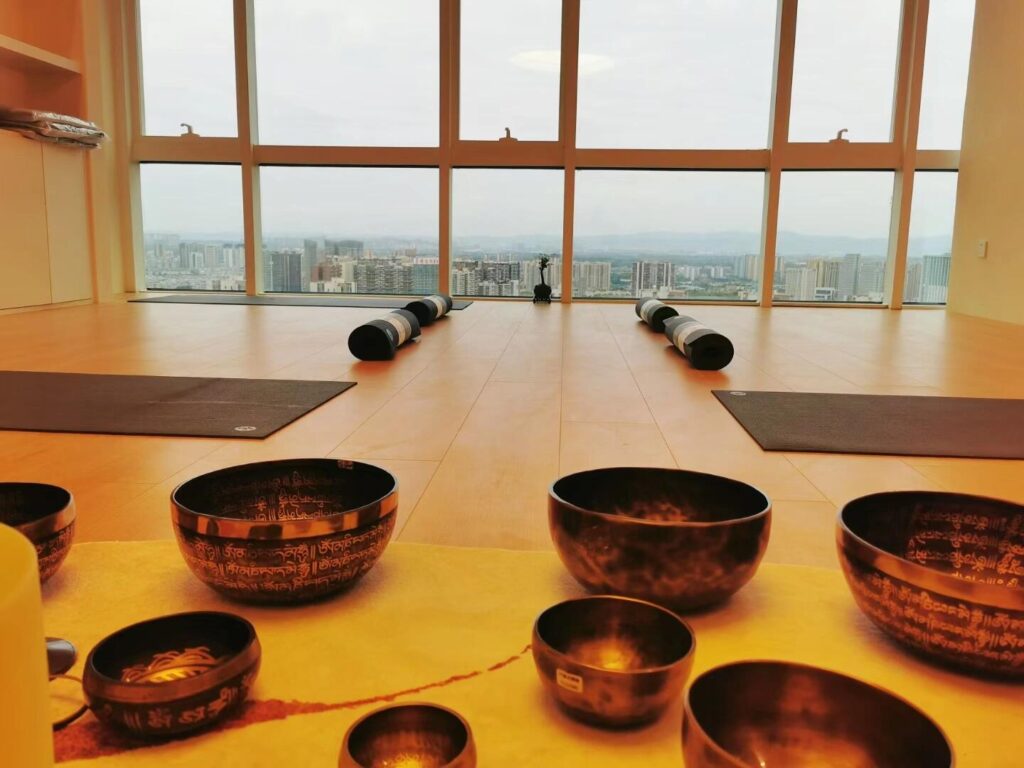
How Bowl Size and Wall Thickness Affect Sound
Bowl diameter and wall thickness together determine the fundamental frequency and overtone profile of a singing bowl. Larger diameter bowls with thicker walls produce lower fundamental frequencies and longer sustain. Smaller bowls with thinner walls produce higher pitches and quicker decay. A bowl’s weight is a useful proxy for wall thickness — heavier bowls of the same diameter are generally thicker-walled and produce a richer, more complex overtone spectrum.
For meditation practice, a bowl that produces a clear, sustained tone with overtones you find pleasant is more useful than one that simply produces any tone. The goal is an auditory focus point — not a particular chakra “frequency.”
Materials: Bronze, Brass, and Crystal
Most traditional Himalayan-area singing bowls are made from a copper-tin alloy (often loosely called “bronze” or “brass”). The proportions vary by maker and are not standardized. Crystal bowls are a separate category — made from tempered glass — and produce a distinctly different sound with less harmonic complexity.
Traditional seven-metal bowls are described as containing gold, silver, mercury, copper, lead, iron, and tin. This composition is part of the craft tradition’s narrative but is not independently verifiable in most cases. The practical implication of different metal ratios is tonal variation, not any metaphysical property.
Quality markers to look for:
- Hammer marks on the exterior indicate hand-forged shaping rather than machine spinning
- Consistent wall thickness (detectable by tapping and listening for even resonance)
- Clean, polished interior surface with no cracks or tool marks that would damp vibration
Acoustic Quality: How to Evaluate a Bowl by Ear
Strike the bowl gently with the wooden mallet and listen from a distance of 30–50 cm. A well-made bowl will produce a clearly audible fundamental tone that decays smoothly over several seconds. If the tone dies immediately, the bowl may have thin or inconsistently thick walls. A “beating” or rapidly alternating loud-soft quality suggests the fundamental and an overtone are close in frequency — common in poorly designed bowls.
When circling the rim, the sustained tone should be steady and free of pitch wavering. Slight wavering is normal in antique bowls due to accumulated micro-cracks in the metal; excessive wavering in new bowls indicates structural issues.
Antique vs. New Bowls: Practical Trade-offs
Antique bowls from Nepal or India often have complex, evolving overtone profiles due to decades of use and hand-hammering techniques no longer practiced. Their visual character — patina, irregular hammering marks, decorative etchings — reflects their age and use. The acoustic experience is distinct from most new production bowls.
New bowls made by skilled craftspeople in Kathmandu and Pokhara are typically more precisely tuned and cheaper than comparable antiques, but the tonal complexity is generally lower. Both are legitimate choices depending on budget, tonal preference, and aesthetic.
Maintenance and Storage
Wipe the bowl with a dry cloth after each use to remove oils from hands and any moisture. Store in a dry place; avoid leaving it in direct sunlight or high-humidity environments, which can accelerate corrosion, especially on bowls with soft solder decorations. Do not submerge metal bowls in water or clean with chemical cleaners. Crystal bowls can be wiped with a barely damp cloth.
Frequently Asked Questions
Are singing bowls historically used in Tibetan Buddhist practice?
Yes. Singing bowls have been used in Buddhist monastic settings across the Himalayan region for centuries — primarily to mark the beginning and end of meditation sessions and as a sounding vessel for rituals. They are one among several types of sound-making objects used in these contexts, alongside handbells (dril bu) and small gongs.
Is there a reliable way to match a bowl to a specific note or purpose?
The idea that bowls must be “tuned to” specific chakra frequencies is not supported by the historical or practical literature of Tibetan Buddhist traditions. Bowl tuning is a modern commercial concept. In practice, most people choose a bowl by finding a sound they find calm and focused — not by matching a pitch to a body location.
Should I choose an antique or a new bowl?
Consider antiques if visual character, historical provenance, and complex overtones matter to you. Consider new bowls if consistent tuning, lower cost, and reliable quality control are priorities. Neither is inherently superior for meditation purposes.
How do I care for a singing bowl?
Keep it dry and clean. Wipe with a dry cloth after each use. Store upright or padded to avoid dents. Do not use water, solvents, or abrasive cleaners on the interior surface. If the bowl develops a dull tone over time, gently polishing the interior with a non-abrasive cloth may help restore some brightness to the sound.
Conclusion
A singing bowl is chosen primarily by ear. The acoustic qualities that matter most are a clear sustained tone, pleasant overtone balance, and sufficient sustain for use as a meditation focus object. Material composition and craftsmanship affect these qualities directly. The cultural and craft context of Himalayan-area bowls — their origins in monastic and contemplative settings — is part of what gives them their standing as practice objects. Understanding them on these terms is more useful than evaluating them through generalized wellness language.